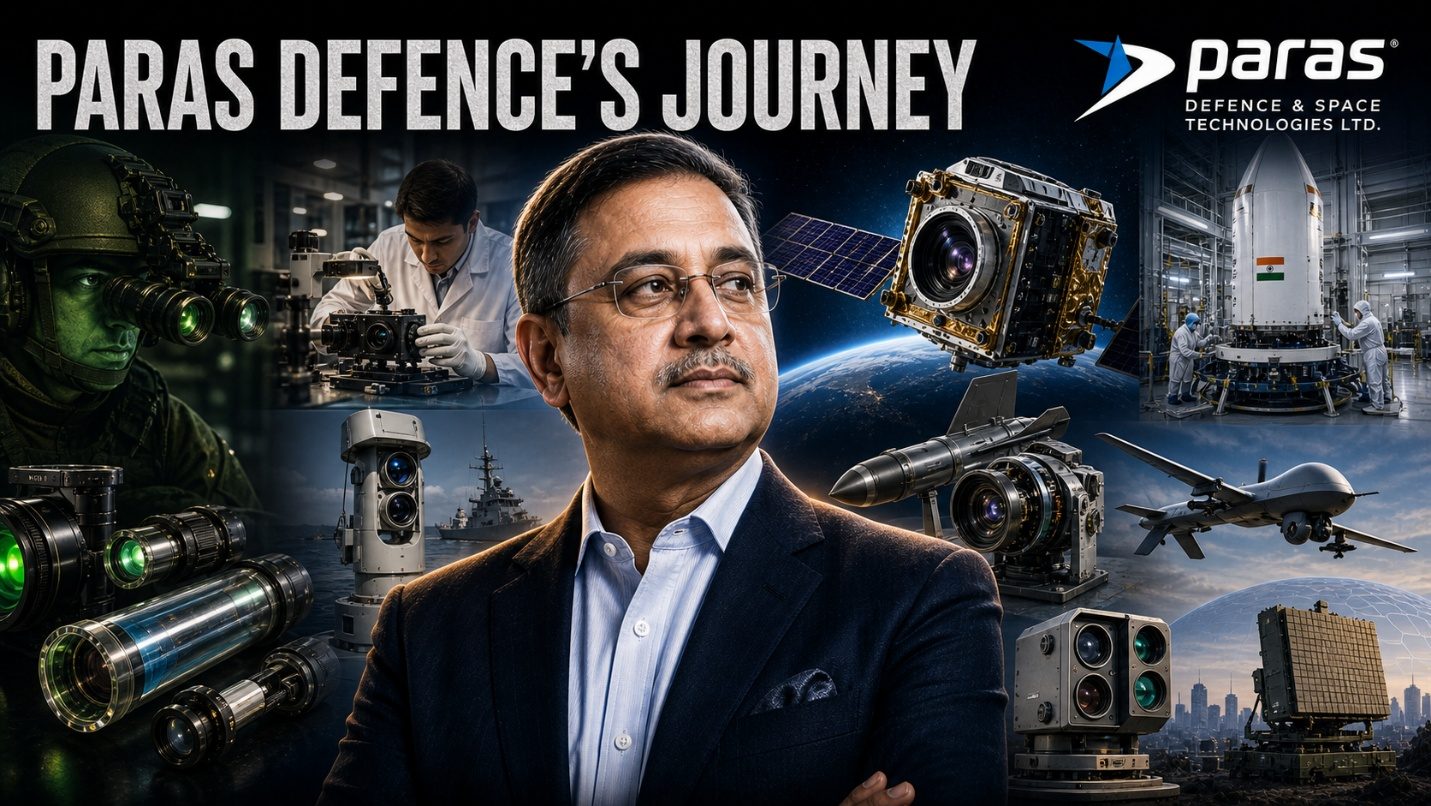
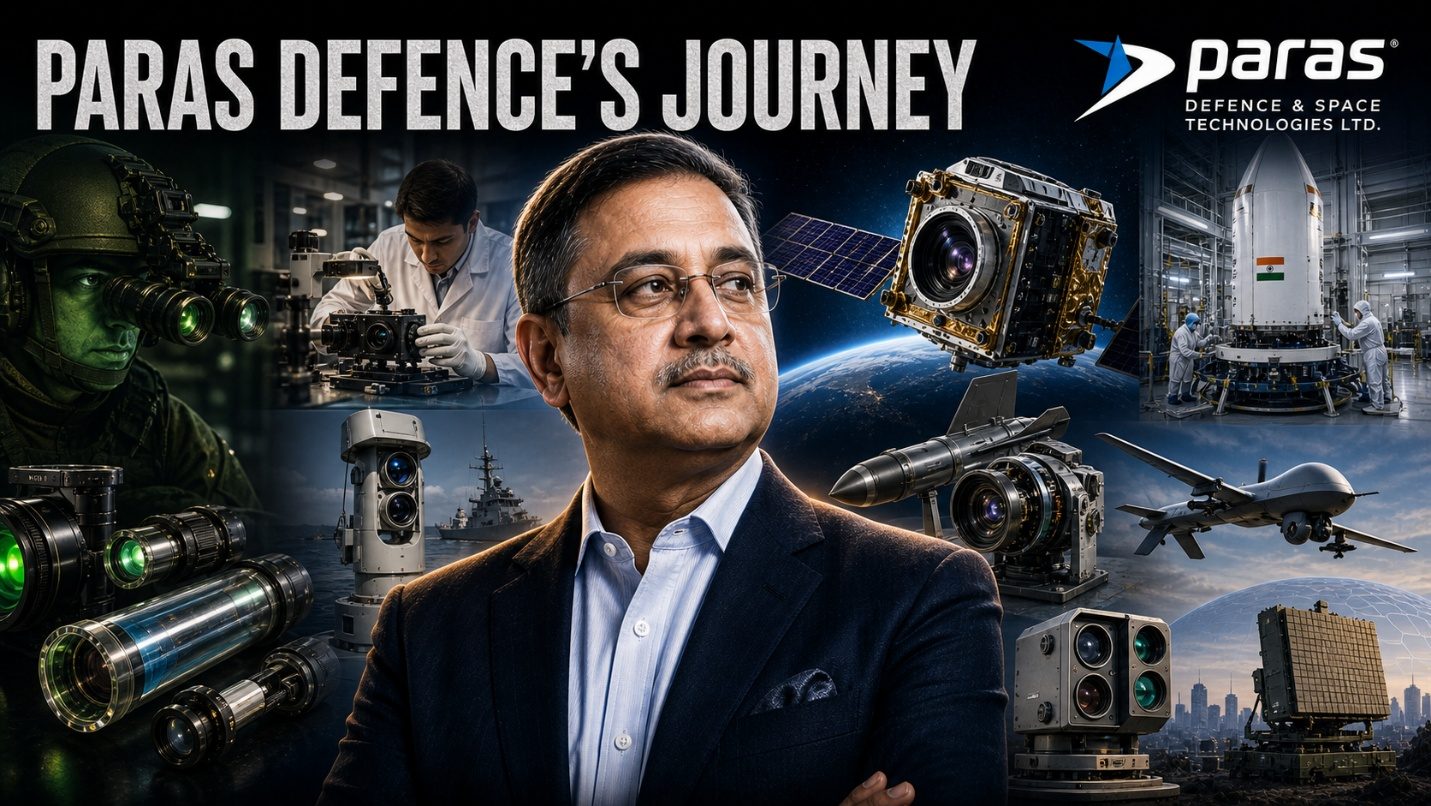
Paras Defence did not wait for indigenisation to become policy, it built the optical and electromagnetic capability across two decades, so that when the policy turned, the capability was already there. The record-breaking IPO subscription and the multi-year re-rating simply priced what had been built quietly all along. Here is the journey, year by year.
- Founded in 1979 to make optronic systems, night-vision devices and image-intensifier tubes, for the armed forces.
- It expanded into EMP protection, naval periscope optics, missile sub-systems and, from 2018, space optics for ISRO.
- Its October 2021 IPO was subscribed 304x, the year’s most oversubscribed, and listed at a 171% premium.
- By FY25 revenue was around ₹350 crore with 15%+ margins and an order book above ₹800 crore, led by counter-drone demand.
- FY25 Revenue runs around ₹350 crore at an operating margin above 15%, with an order book above ₹800 crore.
1979 Sharad Shah and family found Paras Defence to make optronic systems for the armed forces, starting with night-vision devices and image-intensifier tubes.
2005 It diversifies into electromagnetic-pulse (EMP) protection.
2012 It adds naval periscope optics and missile sub-system components.
2018 It adds satellite optics and space-grade imaging components, with ISRO becoming a customer.
Oct 2021 Its IPO at ₹175 is subscribed 304x, the most oversubscribed Indian IPO of the year, and lists at ₹475, a 171% premium.
2022 First commercial drone-payload contracts arrive, and counter-drone systems begin entering the order book.
2024 Counter-drone systems become a national priority, and Paras makes strategic acquisitions across the drone and space sub-component ecosystem.
2025 Quantum-communication research begins and a new facility for optical and electromagnetic sub-systems is commissioned.
2026 With its order book at all-time highs, Paras emerges as a small-cap defence picks-and-shovels franchise with multi-vertical capability.
The pattern is the point
Paras built optical and electromagnetic capability across two decades rather than waiting for indigenisation to become official policy. When the policy finally turned, the IPO subscription and the re-rating simply priced what had quietly been built all along, proof that the early bet on indigenisation, made before the policy turned, is the one that paid the most.