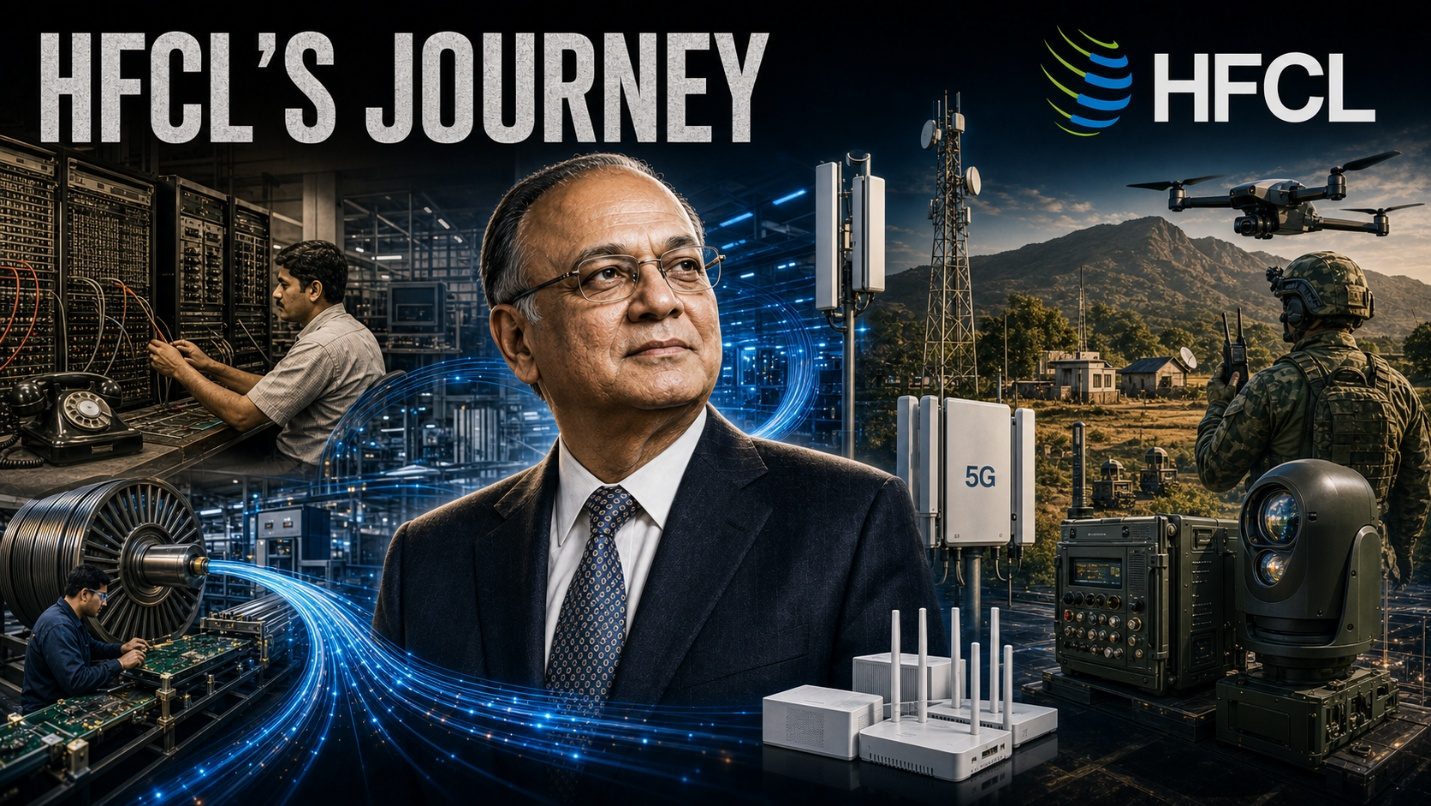
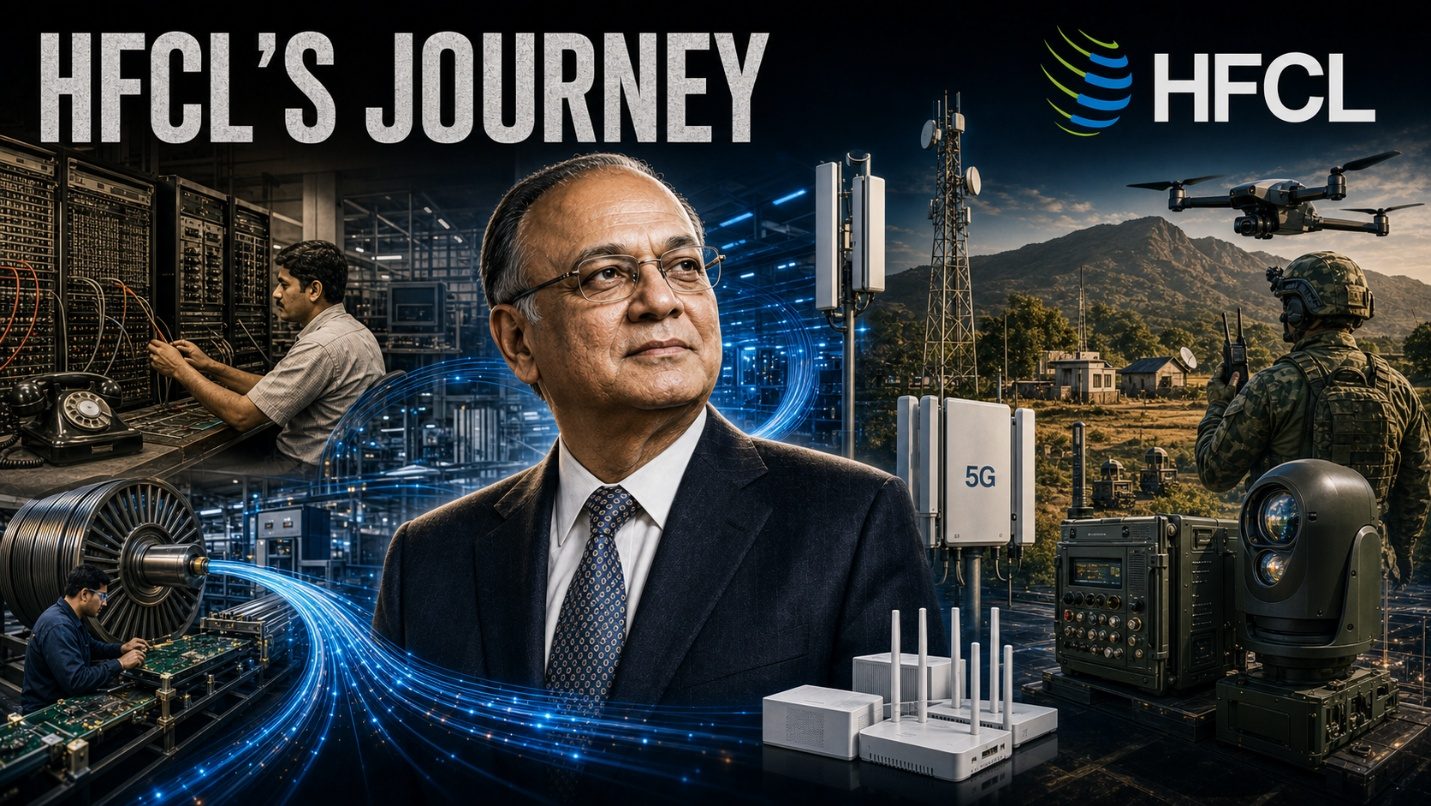
HFCL did not survive by luck. It survived because its promoter did not sell, holding the company together through the telecom bust, a pledged-share crisis and a decade in the wilderness, until 5G, Make-in-India and defence indigenisation made it relevant again. Here is the journey, year by year.
- Founded in 1987 to make telephone-exchange equipment in India, then the first to build digital switching for the Department of Telecom.
- The 2002 telecom bust and a contract dispute crashed the stock and left promoter shares heavily pledged.
- A 2015 reset, pledge released, optical-fibre expansion, began the turnaround, followed by defence and 5G.
- A 2023 BSNL 4G/5G award rode the largest indigenous telecom-equipment buildout in Indian history; FY25 revenue reached around ₹4,500 crore.
- FY25 Revenue runs around ₹4,500 crore across three businesses, optical fibre, 5G equipment and defence electronics, with an order book above ₹6,500 crore.
1987 Mahendra Nahata founds Himachal Futuristic Communications (HFCL) in Solan, Himachal Pradesh, betting India’s imported telephone exchanges can be built at home.
1992 It becomes the first Indian company to manufacture digital switching equipment for the Department of Telecom.
2002 The telecom bust and a dispute over the Reliance Infocomm contract crash the stock, leaving promoter holdings heavily pledged.
2008–2014 A decade under corporate-debt restructuring follows, and analysts write the company off.
2015 The pledged holding is released, a strategic reset begins, and an optical-fibre-cable expansion is announced.
2018 First defence contracts are secured, in electro-optic devices and military communications.
2020 5G-equipment development begins, alongside indigenous router and switch design.
Aug 2023 HFCL secures BSNL 4G/5G equipment orders, riding the largest indigenous telecom-equipment buildout in Indian history.
2024 The defence order book hits record levels, spanning drone hardware, soldier-modernisation and optical-surveillance systems.
2026 Three businesses compound at once, optical fibre, 5G equipment and defence electronics, after the optical-fibre capacity expansion and Korean joint ventures.
The pattern is the point
HFCL’s survival came down to one thing: Nahata did not sell. Through the bust, the pledge and the wilderness years, the promoter held the company together until 5G, Make-in-India and defence indigenisation made it relevant again. The wilderness is part of almost every multibagger, the trick is owning it before the wilderness ends.