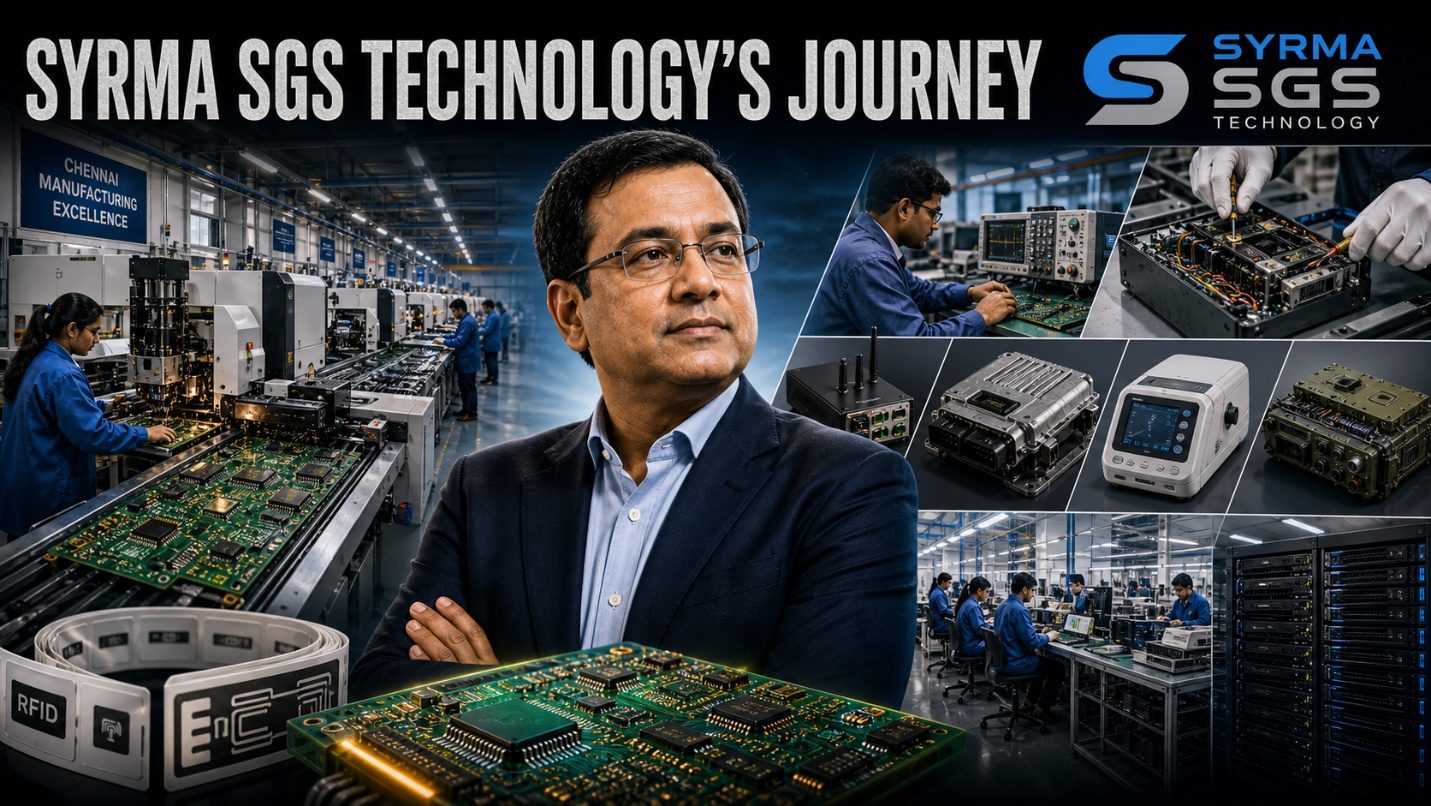
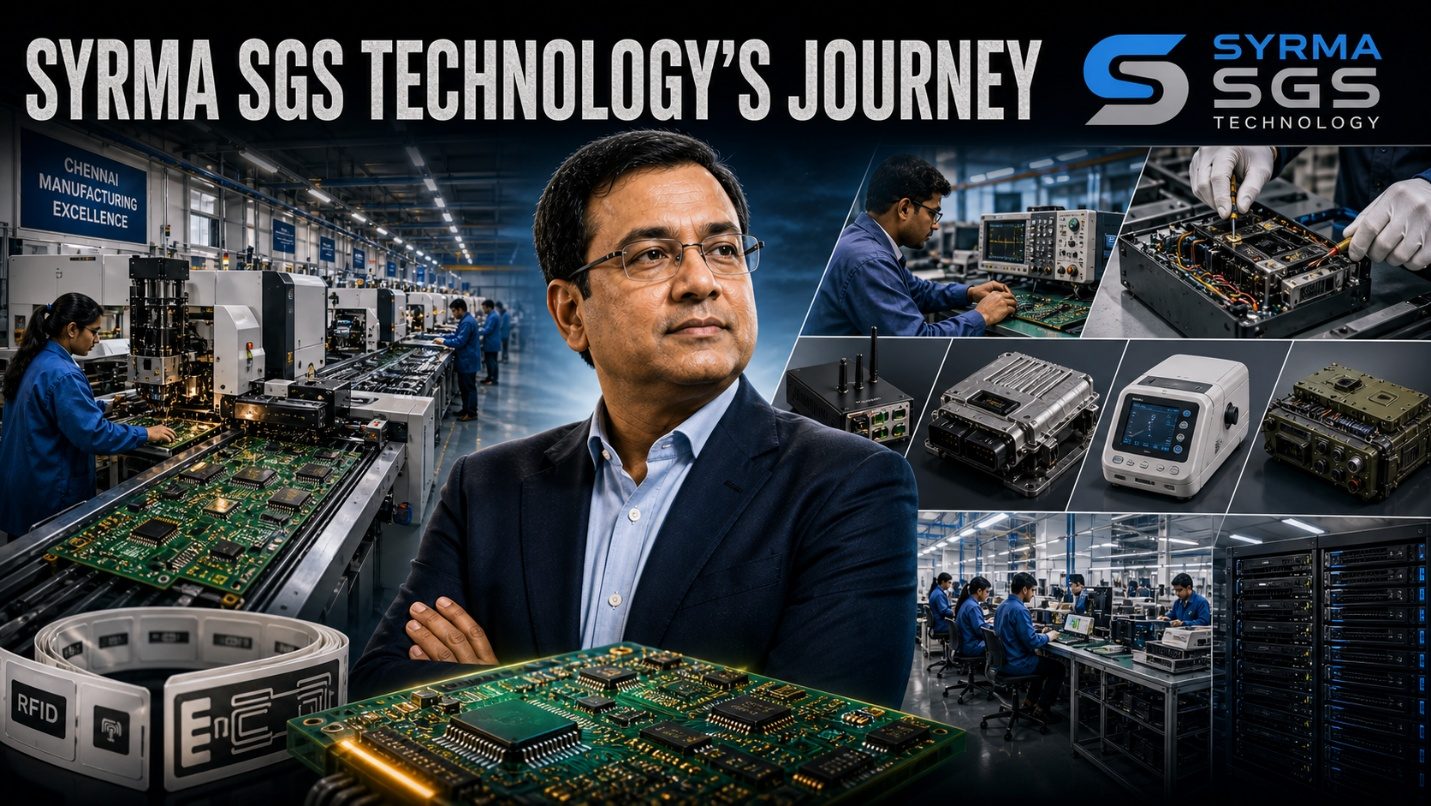
Syrma SGS built an electronics-manufacturing franchise across the most fragmented part of the Indian value chain, and it is one of the few players that can do design, manufacturing and engineering in one place. The verticals nobody else wanted turned out to be the ones that scale when policy and demand finally arrive together. Here is the journey, year by year.
- Founded in Chennai in 2004 as a contract electronics manufacturer.
- A 2020-21 merger with SGS Tekniks created one of the few Indian EMS players with a national footprint.
- Its August 2022 IPO was subscribed 33x and listed at a premium.
- By FY25 revenue topped ₹3,500 crore across automotive, industrial, healthcare/defence and RFID/IT hardware, aided by India’s PLI push.
- FY25 Revenue tops ₹3,500 crore as the order book builds across PLI-eligible categories.
2004 Syrma Microsystems is founded in Chennai as a contract electronics manufacturer.
2008 It builds out PCB assembly, box-build manufacturing and RFID tag-and-inlay production.
2021 Syrma Microsystems merges with SGS Tekniks of Gurugram, creating one of the few Indian EMS players with a national footprint.
Aug 2022 Syrma SGS's ₹220 IPO is subscribed 33x and lists at ₹262, a ~19% premium.
2023 Production-linked incentives for IT hardware and services drive a structural shift toward Indian electronics manufacturing, and Syrma adds defence, IT-hardware and healthcare customers.
2024 Design-led manufacturing services scale and the customer count crosses 200.
2025 EMS revenue compounds across automotive, defence, industrial and IT hardware, while the RFID business scales globally on US retail and logistics customers.
2026 Four verticals run together, automotive, industrial, healthcare/defence, and RFID/IT hardware, with the design-led shift improving the mix.
The pattern is the point
Syrma built across the most fragmented part of the Indian electronics value chain, and it is one of the few firms that can combine design, manufacturing and engineering in one place. The verticals nobody else wanted are exactly the ones that scale when policy and demand finally arrive together, which is what India’s PLI wave delivered.