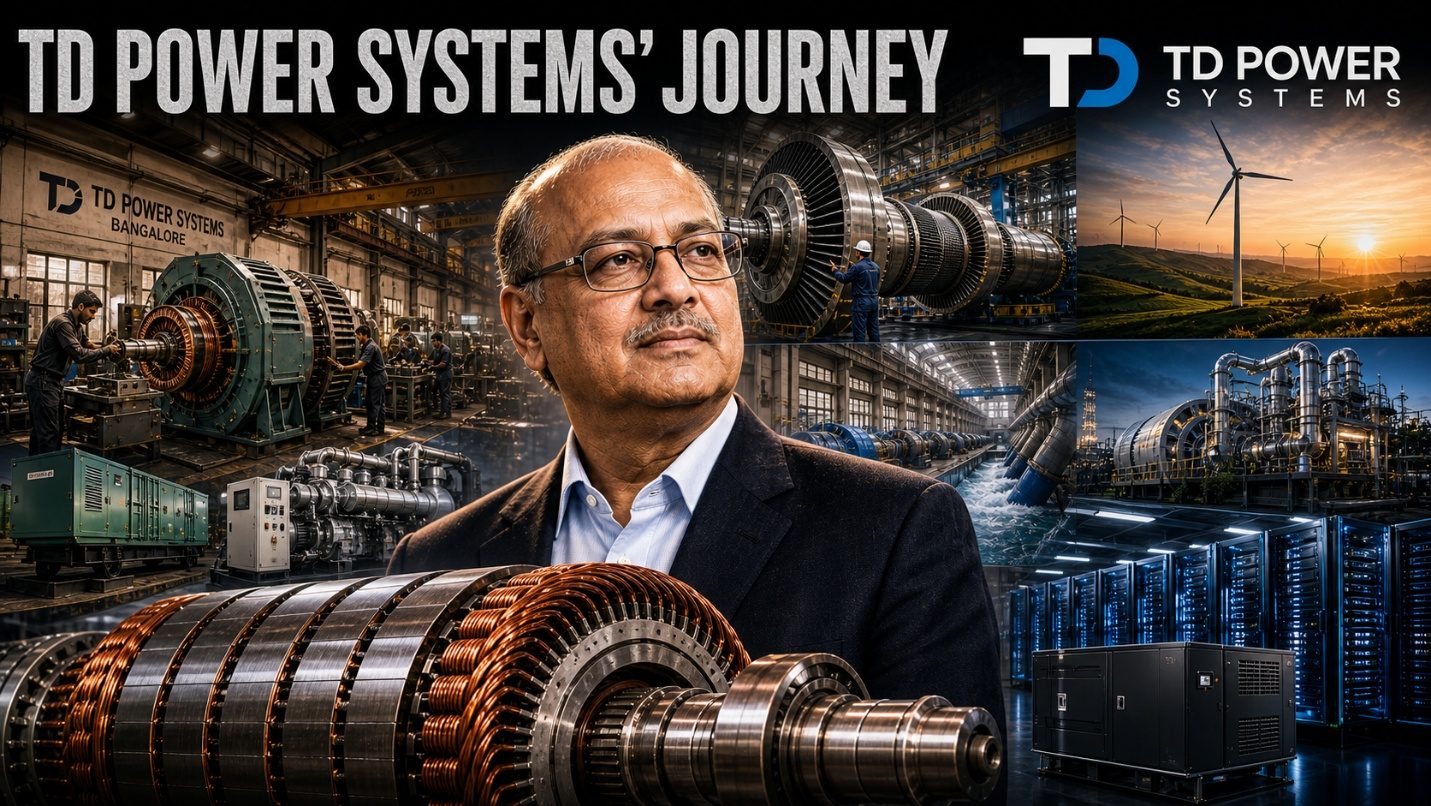
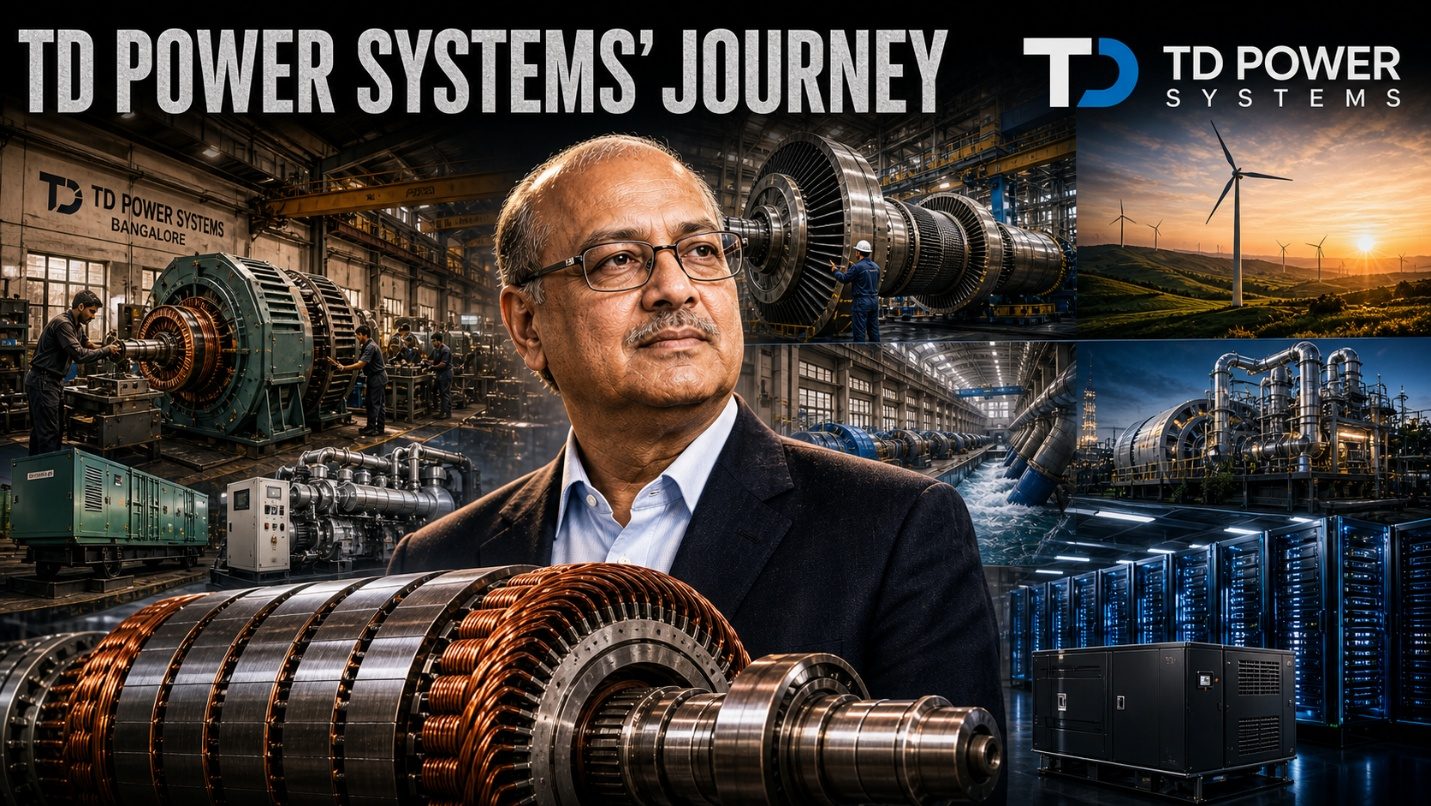
TD Power Systems did not need to invent a new business. It needed the world to start needing generators again, and in the 2020s the renewables cycle, the data-centre cycle and the industrial-capex cycle all arrived at once. As the only listed Indian maker of rotating electrical machines at scale for global turbine OEMs, it was perfectly placed. Here is the journey, year by year.
- Founded in Bangalore in 1999 to make generators for hydro, gas, steam and wind turbines.
- It became a contract manufacturer for global OEMs including Siemens, GE, Voith, Andritz and Mitsubishi.
- After years of a lumpy order book, demand returned via data-centre gensets, wind and hydro.
- By FY25 revenue was around ₹1,200 crore with margins at decade highs and an order book above ₹1,500 crore.
- FY25 Revenue runs around ₹1,200 crore at an operating margin above 12%, with an order book above ₹1,500 crore and margins at decade highs.
1999 Nikhil Kumar founds TD Power Systems in Bangalore, betting the world will keep needing generators for hydro, gas, steam and wind turbines.
2003 It becomes a contract manufacturer for global turbine OEMs.
2008 Its customer roster expands to include Siemens, GE, Voith, Andritz and Mitsubishi.
Aug 2011 TD Power lists at ₹256, subscribed modestly.
2014–2018 The order book is lumpy through a power-sector slowdown, and the stock languishes.
2020 Industrial-generator demand picks up and the data-centre genset market emerges.
2023 The order book hits record levels as wind-generator demand returns with global wind installations.
2024 Hydro-generator orders arrive from Africa, South America and Southeast Asia.
2025 The renewable, data-centre and industrial-capex cycles all arrive together, with TD Power the only listed Indian name making rotating machines at scale for global turbine OEMs.
2026 It has multi-year order visibility across hydro, gas, wind and steam turbine generators, and the stock is a multibagger from its 2020 lows.
The pattern is the point
TD Power did not need a reinvention, it needed the world to start needing generators again, and the renewables, data-centre and industrial cycles obliged at the same time. The lesson is patience: the cycles you wait for, eventually arrive, and the company still standing when they do captures the upside.