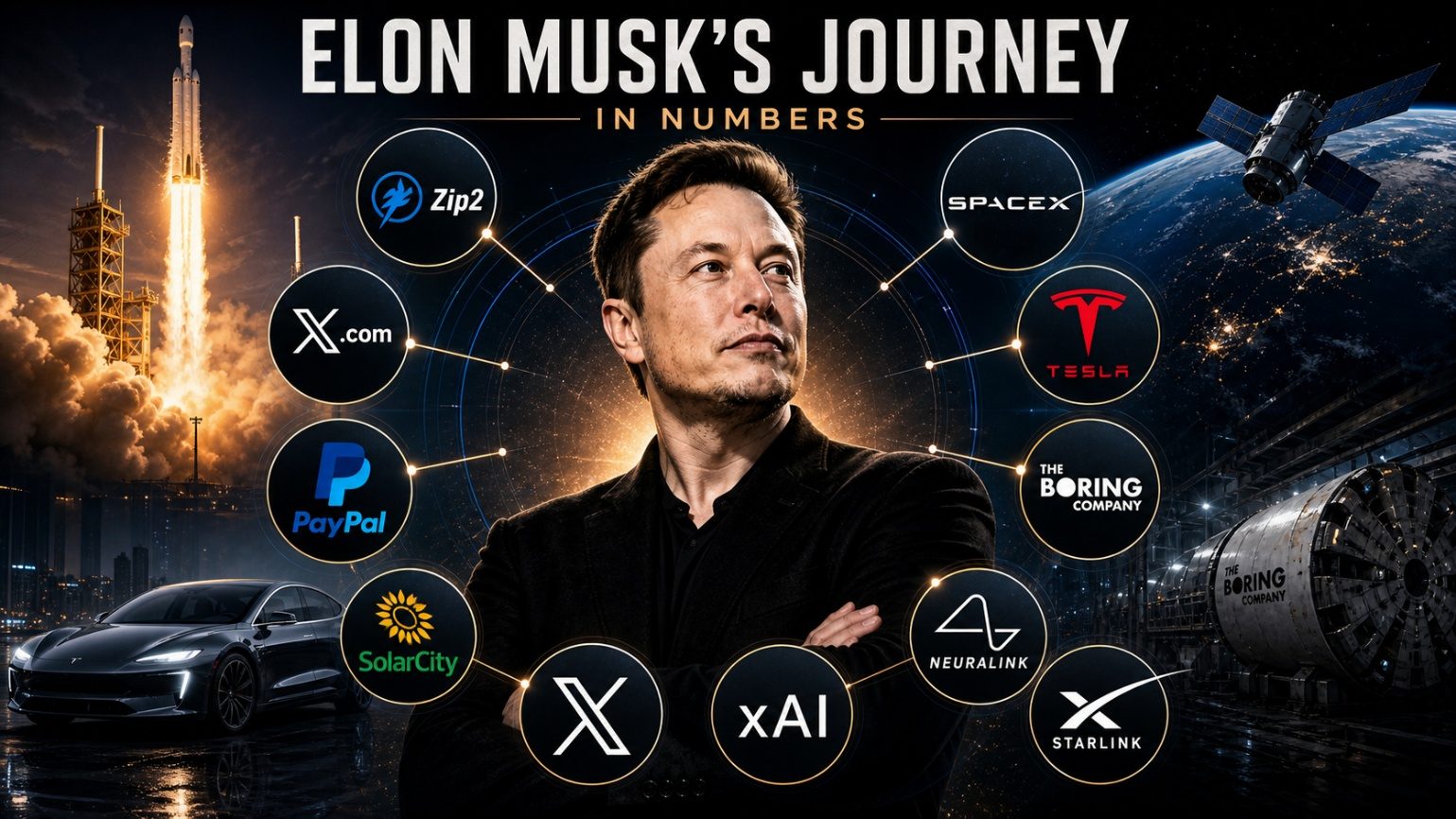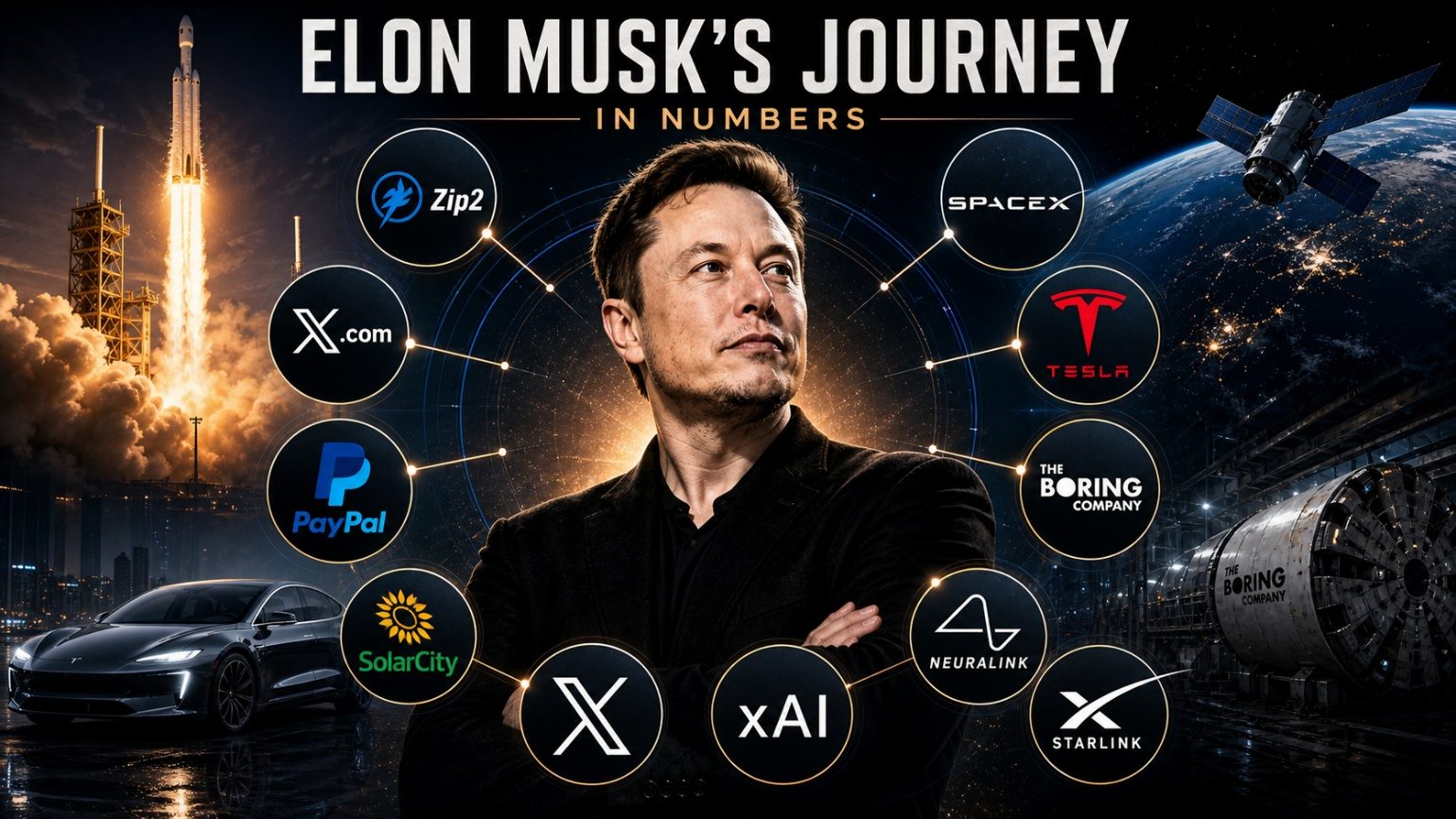
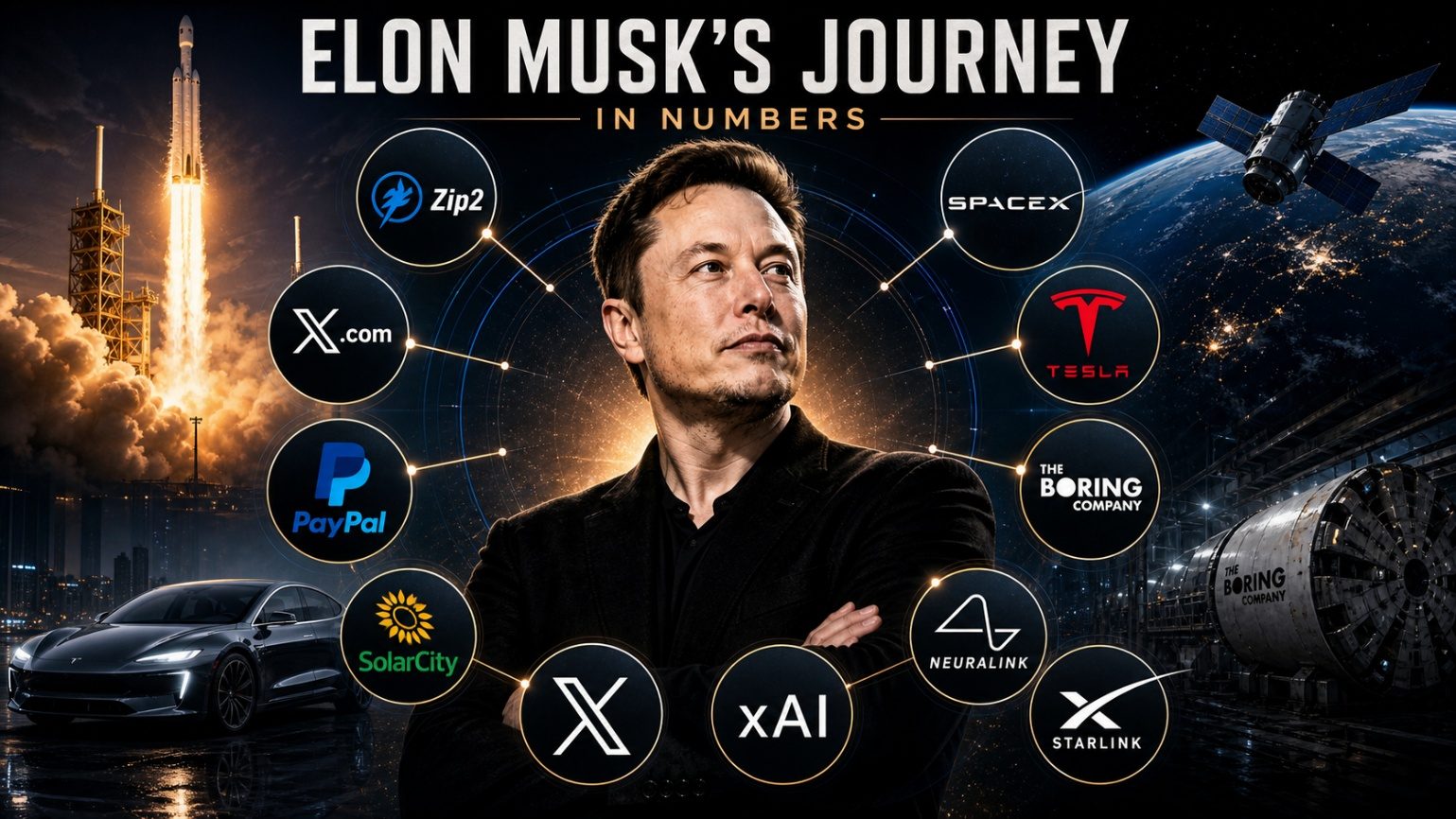
From the outside, Elon Musk’s companies look like a scattergun, a car maker, a rocket builder, an AI lab, a brain-implant start-up, a tunnelling firm. Put them in one frame, with Musk at the centre, and a single thesis snaps into focus: each one attacks a different hard physical problem that the next century has to solve.
The companies, and the problem each one owns
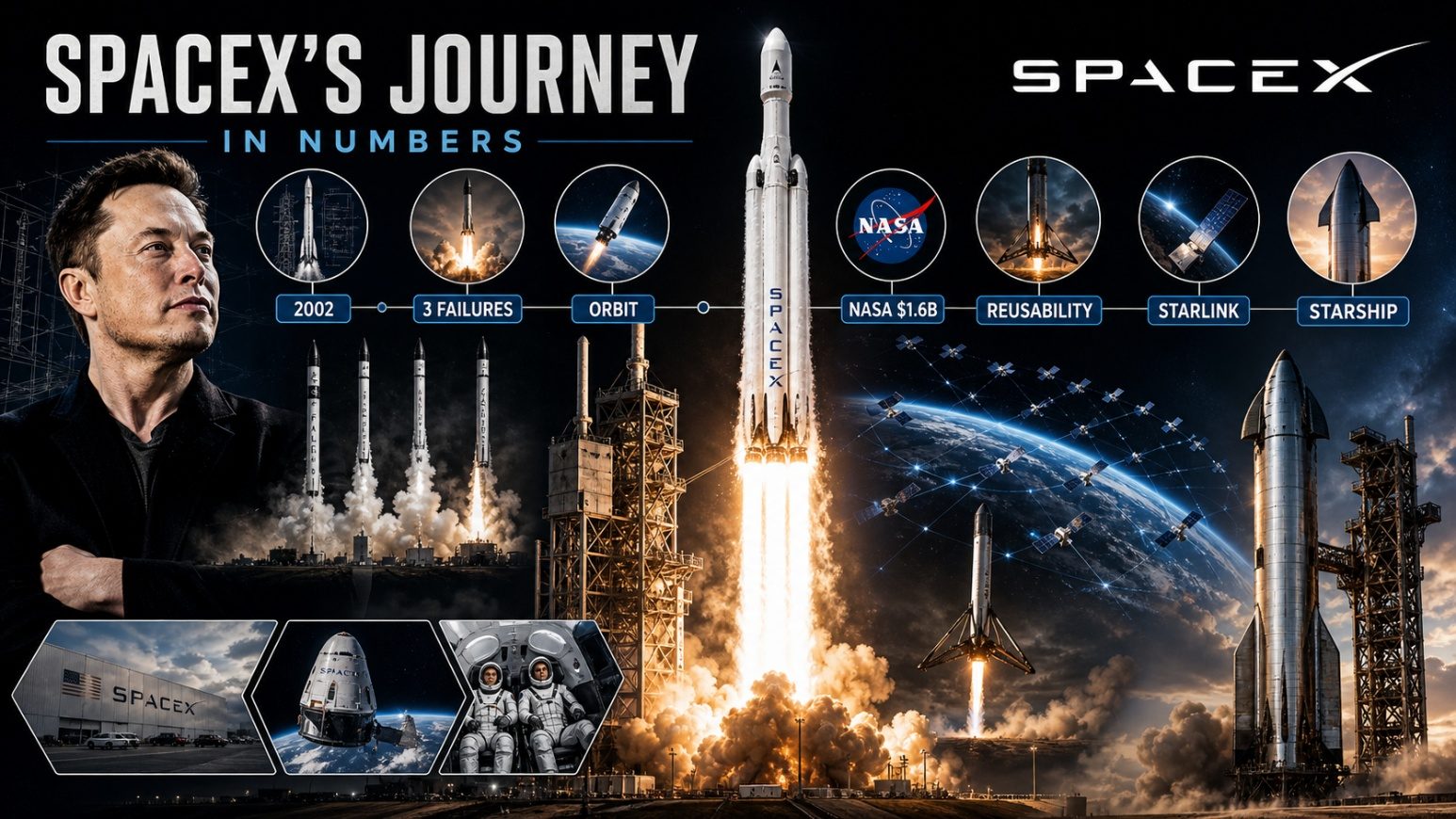
SpaceX Access to space. Reusable Falcon rockets, the Starlink network, and Starship, the bet that cheap, heavy lift can turn Mars from a moonshot into an engineering schedule. By 2026 it flies more than 80% of the world’s mass to orbit and is valued north of a trillion dollars.
Tesla The transition off oil. Mass-market electric cars, an expanding self-driving effort and a charging network, the company that dragged the entire auto industry electric and became, for a time, the most valuable carmaker ever.
Tesla Energy Storing the grid. Powerwall home batteries and utility-scale Megapacks that turn intermittent solar and wind into power available around the clock, quietly one of Tesla’s fastest-growing lines.
xAI Machine intelligence. Frontier compute and the Grok models, merged into the SpaceX story in 2026 to help fund the enormous cost of training at the leading edge.
Neuralink The brain–computer interface. Surgically implanted chips that read from and write to the nervous system, with first human implants aimed at restoring movement and sight.
The Boring Company Moving cities underground. Faster, cheaper tunnels, already shuttling passengers beneath Las Vegas, to attack congestion in three dimensions.
PayPal / X The original win that bankrolled everything, and the platform layer he returned to by buying Twitter for $44 billion and rebuilding it as X.
The one bet underneath
Most conglomerates diversify to reduce risk. Musk’s empire does the opposite: it concentrates on the hardest, most capital-intensive physical problems precisely because almost no one else will touch them. Launch, AI, energy, tunnelling, brain interfaces, each is a decade-long slog with a high chance of failure and, if it works, a near-monopoly at the end. The empire is not a hedge. It is the same bet, placed seven times.
This blog is for information and general interest only. It is not investment advice or a recommendation regarding any company or security. Figures and dates are drawn from public sources.