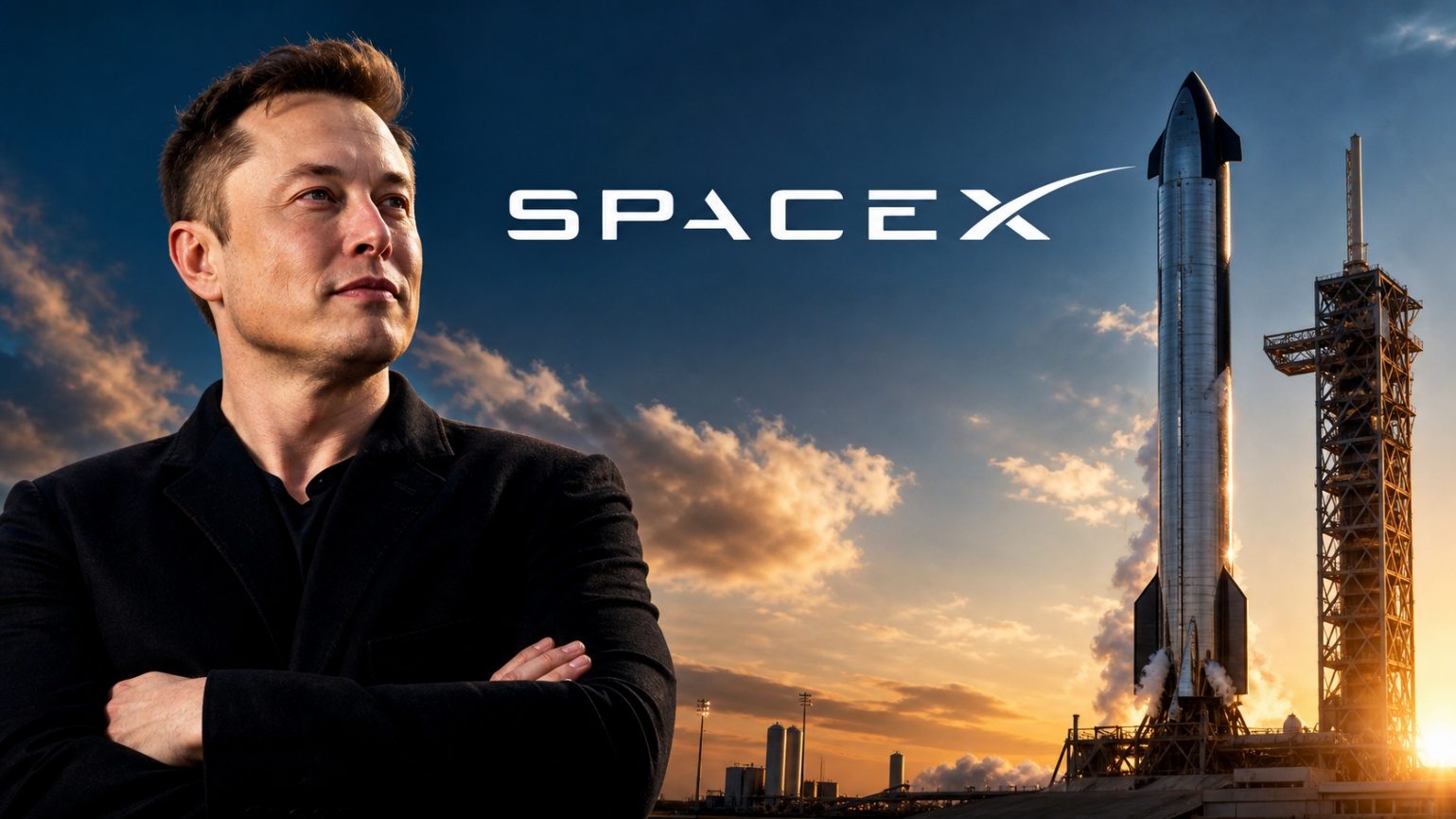
Call SpaceX a rocket company and you have described the smallest part of it. It is three businesses stacked on top of each other, and each one would be the most important company in its own industry.
The launch business
Falcon 9 did what half a century of government programmes could not: it made orbital rockets genuinely reusable. The same first stage now flies, lands and flies again, some boosters more than twenty times each, and the cost of putting a kilogram into orbit has fallen from the tens of thousands of dollars of the Space Shuttle era toward a few thousand, and is still dropping. By 2026 SpaceX launches more often than every other operator on Earth combined and lofts more than 80% of all the mass humanity sends to orbit. Launch has stopped being a bespoke act of engineering and become something closer to a freight schedule.
The network business
Starlink turned those launches into a subscription business. More than 10,000 satellites now blanket low-Earth orbit, serving millions of subscribers on every continent and at sea and in the air, with annual revenue running into double-digit billions and still climbing. It is the largest and most valuable communications network ever built, and it is owned outright by the one company that also controls the cheapest way to launch its replacements. Increasingly, the rockets exist to feed the constellation that prints the cash.
The planet business
Starship is the largest and most powerful rocket ever flown, about 120 metres tall, with the thrust of dozens of jumbo jets, but its size is not the headline. Its cargo capacity is: over 100 tonnes to low-Earth orbit, fully reusable, designed to refuel in space. Every design decision answers a single question, how many tonnes must you be able to move, and how cheaply, to make Mars a working colony rather than a one-off destination?
What the valuation is really pricing
This is why the trillion-dollar-plus valuation that surfaced around SpaceX, confirmed by its 2026 listing, is not really pricing what the company does today. It is pricing what happens when the cost of reaching orbit falls toward a hundred dollars a kilogram. At that price the moon becomes a place to build things, low orbit becomes a manufacturing layer, and Mars becomes a genuine option rather than a slogan. The next century of infrastructure is being assembled by one company, in stages, in public, and the market is still trying to put a number on it.
This blog is for information and general interest only. It is not investment advice or a recommendation regarding any company or security. Figures and dates are drawn from public sources.