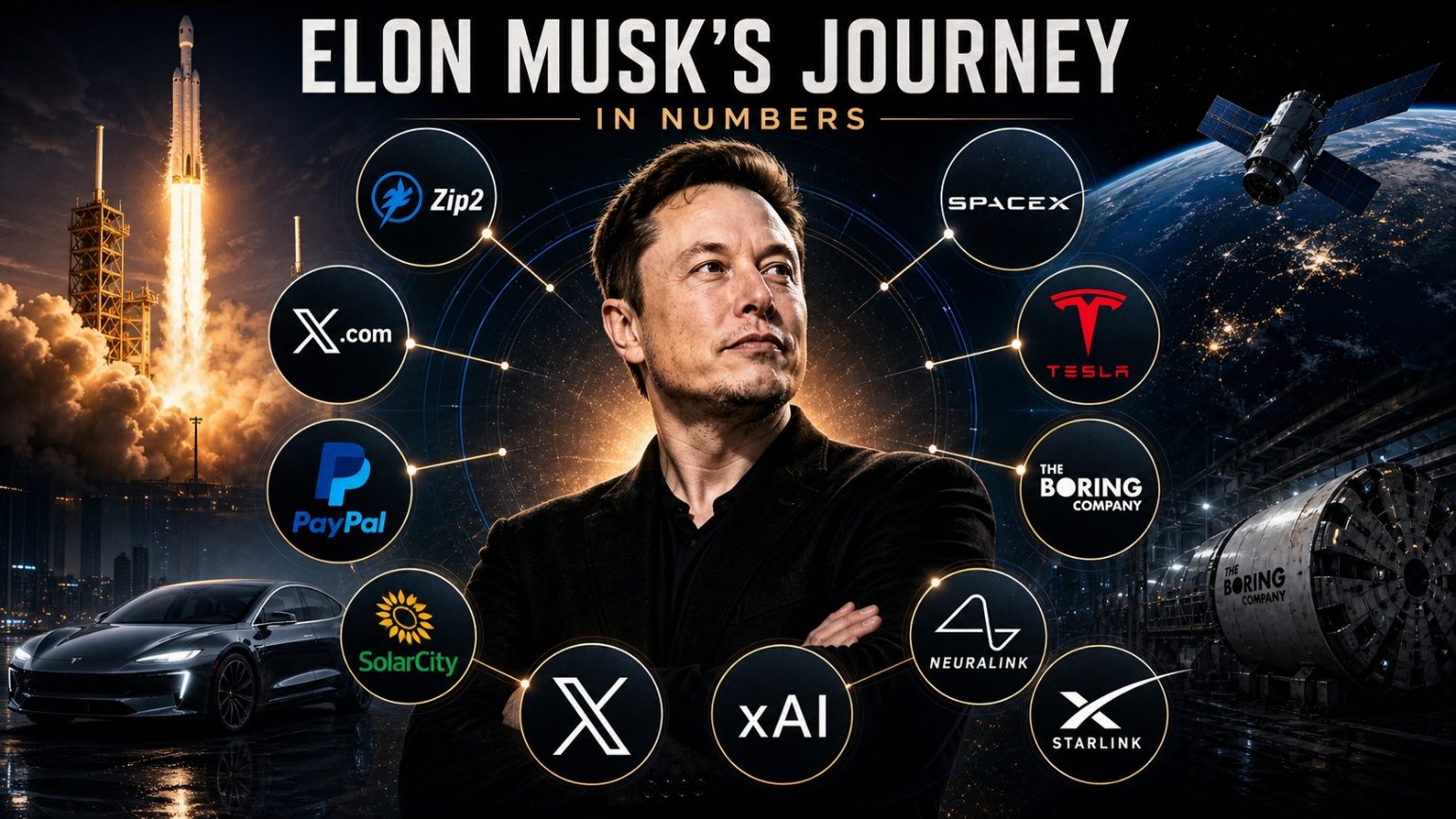
The headline is the trillion. The story is everything that had to break first, the failures, the near-bankruptcies and the bets nobody else would touch. Here is the journey, year by year.
1971 Elon Reeve Musk is born in Pretoria, South Africa, to an engineer father and a model-and-dietitian mother. A bookish, obsessive child who reads encyclopaedias for fun, he is bullied so badly that one beating lands him in hospital. He teaches himself to code by twelve and sells a game called Blastar to a magazine for around $500.
1989 At seventeen, set on reaching America and unwilling to serve in the apartheid-era military, he leaves for Canada on his Canadian-born mother’s citizenship, scraping by on odd jobs, including shovelling grain and cleaning boilers in a lumber mill.
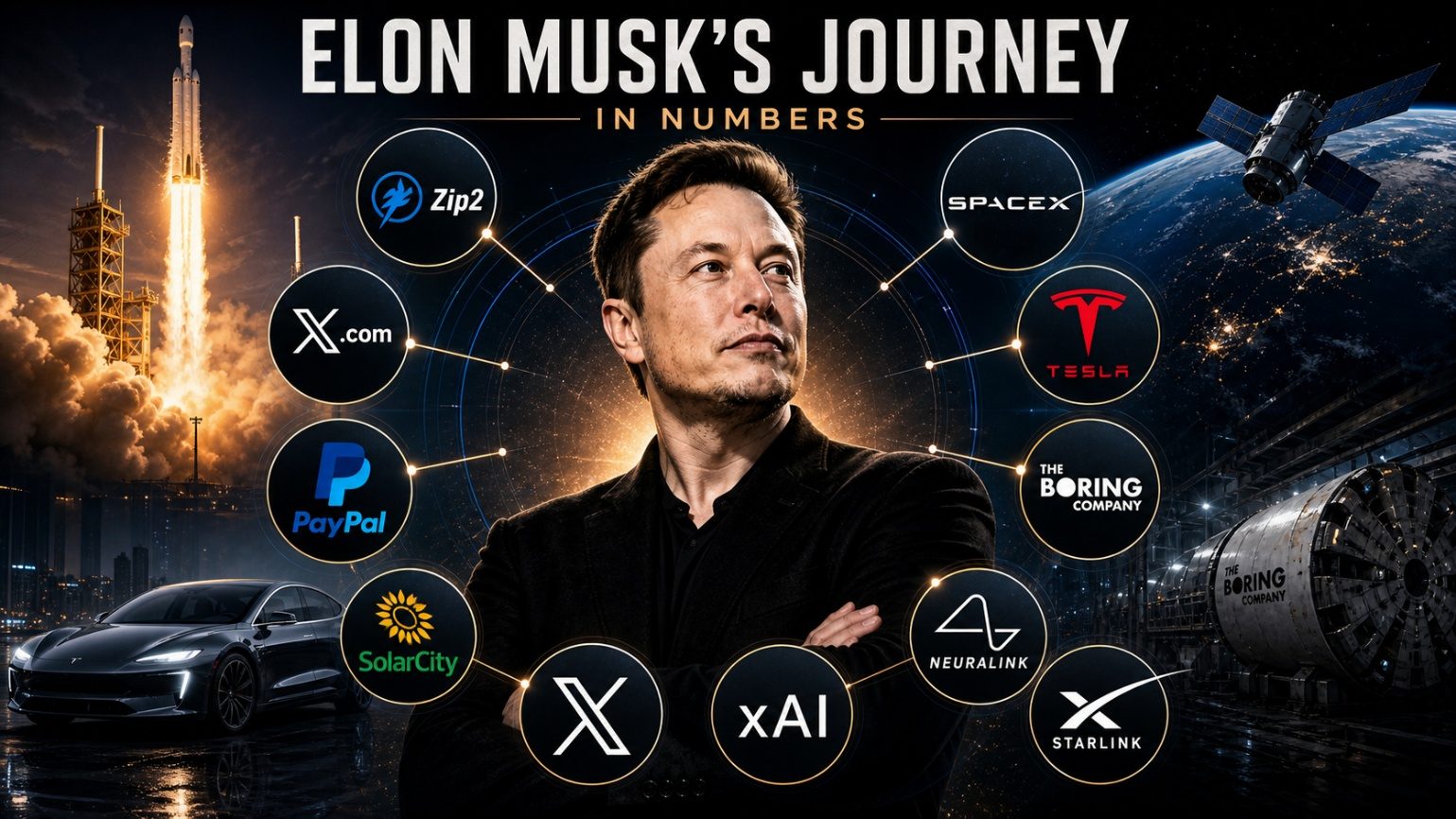
1995 Accepted into a Stanford physics PhD, he lasts two days before dropping out to chase the early internet. With his brother Kimbal he founds Zip2, an online city guide and mapping tool for newspapers; broke, the brothers sleep in the office and shower at the YMCA.
1999 Compaq buys Zip2 for $307 million in cash; Musk’s share is about $22 million at twenty-seven. He immediately pours roughly $12 million into X.com, an online bank that will become PayPal, and is pushed out as CEO while away on his honeymoon.
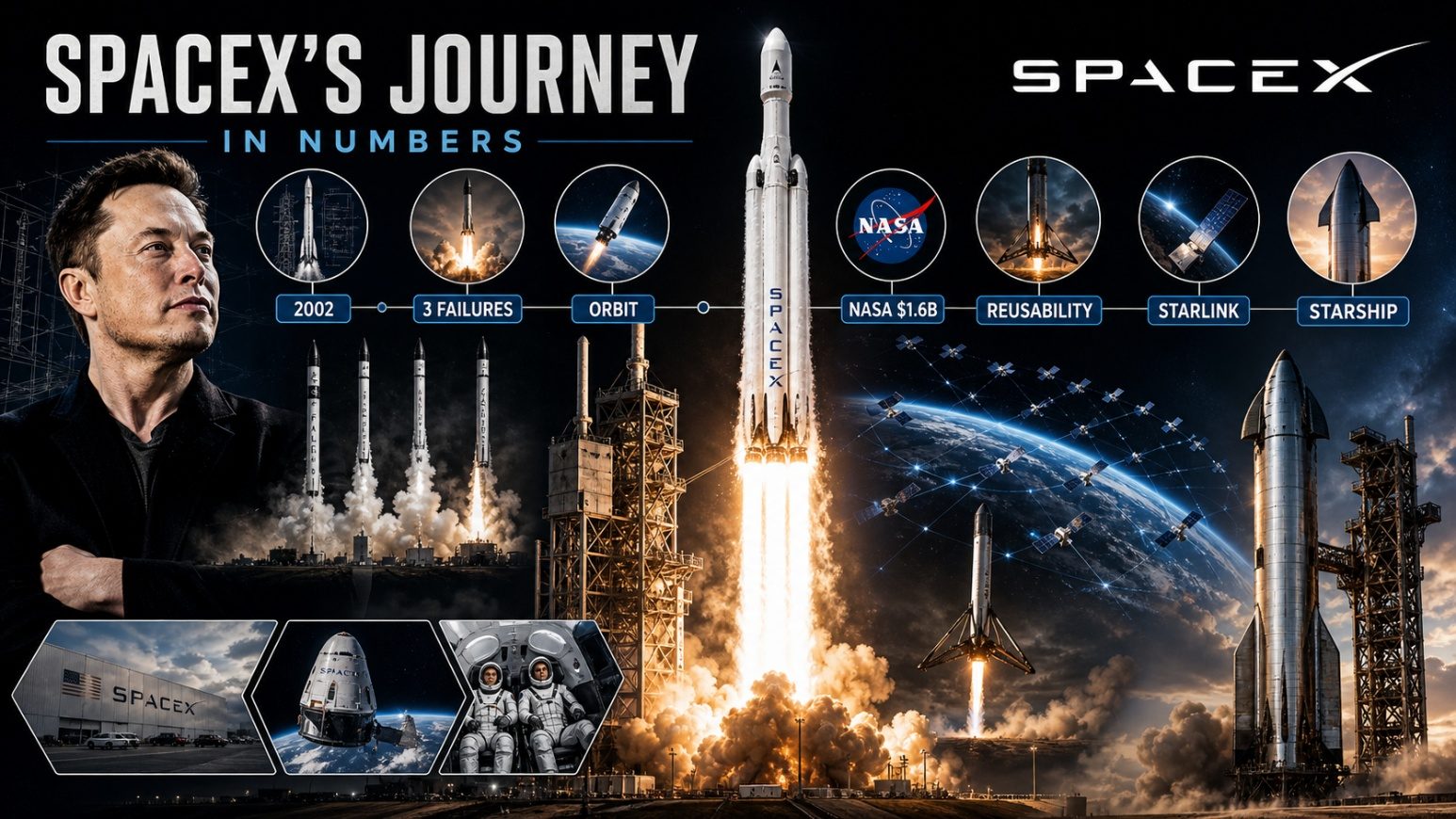
2002 eBay acquires PayPal for $1.5 billion, handing Musk about $180 million. Instead of retiring, he splits the money across three improbable bets, SpaceX, Tesla and SolarCity, and over the next six years feeds almost all of it back in.
2008 The worst year of his life. SpaceX’s first three Falcon 1 launches all fail, Tesla is weeks from bankruptcy in the financial crash, and his marriage ends. By his own account he is borrowing money from friends to cover living costs.
28 Sep 2008 On the fourth attempt, the last one the money could fund, Falcon 1 reaches orbit. Weeks later NASA hands SpaceX a $1.6 billion resupply contract, and on Christmas Eve Tesla closes a rescue round. Both companies survive by a matter of days.
2010 SpaceX becomes the first private company to send a spacecraft to orbit and bring it home, with the Dragon capsule. Tesla holds its IPO, the first American carmaker to go public since Ford in 1956.
2012 Dragon berths with the International Space Station, the first commercial craft ever to do so, turning SpaceX from a start-up into a genuine NASA contractor and proving private spaceflight works.
2015 After a run of fiery crashes, a Falcon 9 first stage lands upright back on Earth for the first time. Reusing rockets, long dismissed as impossible, suddenly looks real, and the economics of the whole launch industry begin to shift.
2018 Falcon Heavy, then the most powerful operational rocket on Earth, flies on its maiden launch carrying Musk’s own cherry-red Tesla Roadster, beaming back images of a car and its spacesuited mannequin drifting past the planet.
2020 Tesla overtakes Toyota to become the most valuable carmaker in history, and Crew Dragon carries NASA astronauts to orbit, the first crewed launch from US soil since the Space Shuttle retired in 2011, and the first ever by a private company.
2022 Musk buys Twitter for $44 billion in a chaotic, litigated deal, renames it X, and turns it into the loudest megaphone in business and politics.
2024 On Starship’s fifth test, the launch tower’s giant arms catch the returning Super Heavy booster out of the air, a piece of science fiction made real, as SpaceX comes to handle over 80% of all the mass humanity puts into orbit.
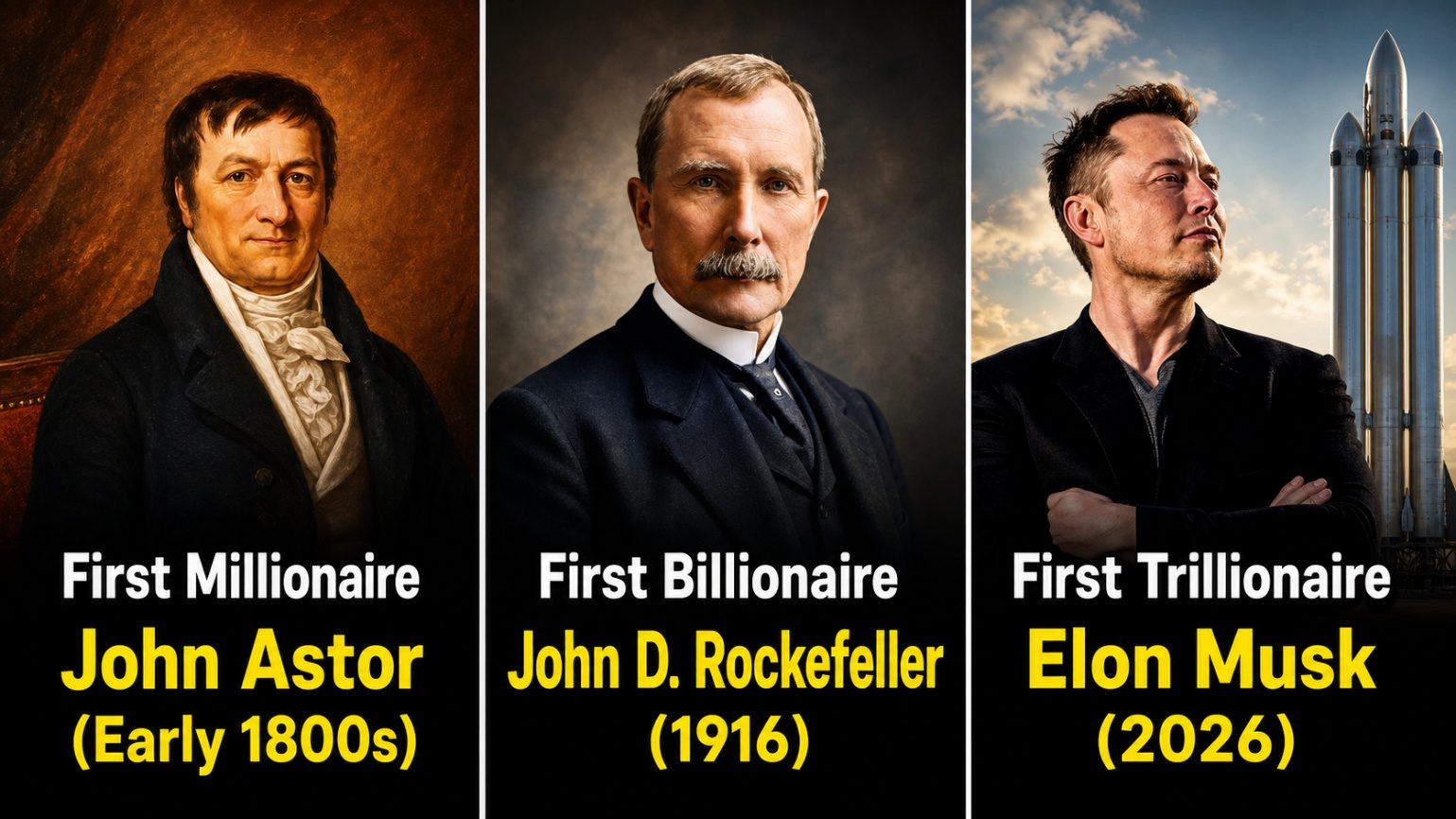
2026 Elon Musk becomes the world’s first trillionaire, as SpaceX’s record stock-market debut and his surging stakes in Tesla and the rest crystallise a fortune built one reinvested bet at a time.
The pattern is the point
He started over after every win. He put every cent of every exit into the next bet. He almost lost everything in 2008. The trillion is not a reward for inheriting a head start, it is what compounding looks like when one person keeps putting their entire balance on the hardest physical problem in front of them. The journey is the message.
This blog is for information and general interest only. It is not investment advice or a recommendation regarding any company or security. Figures and dates are drawn from public sources.