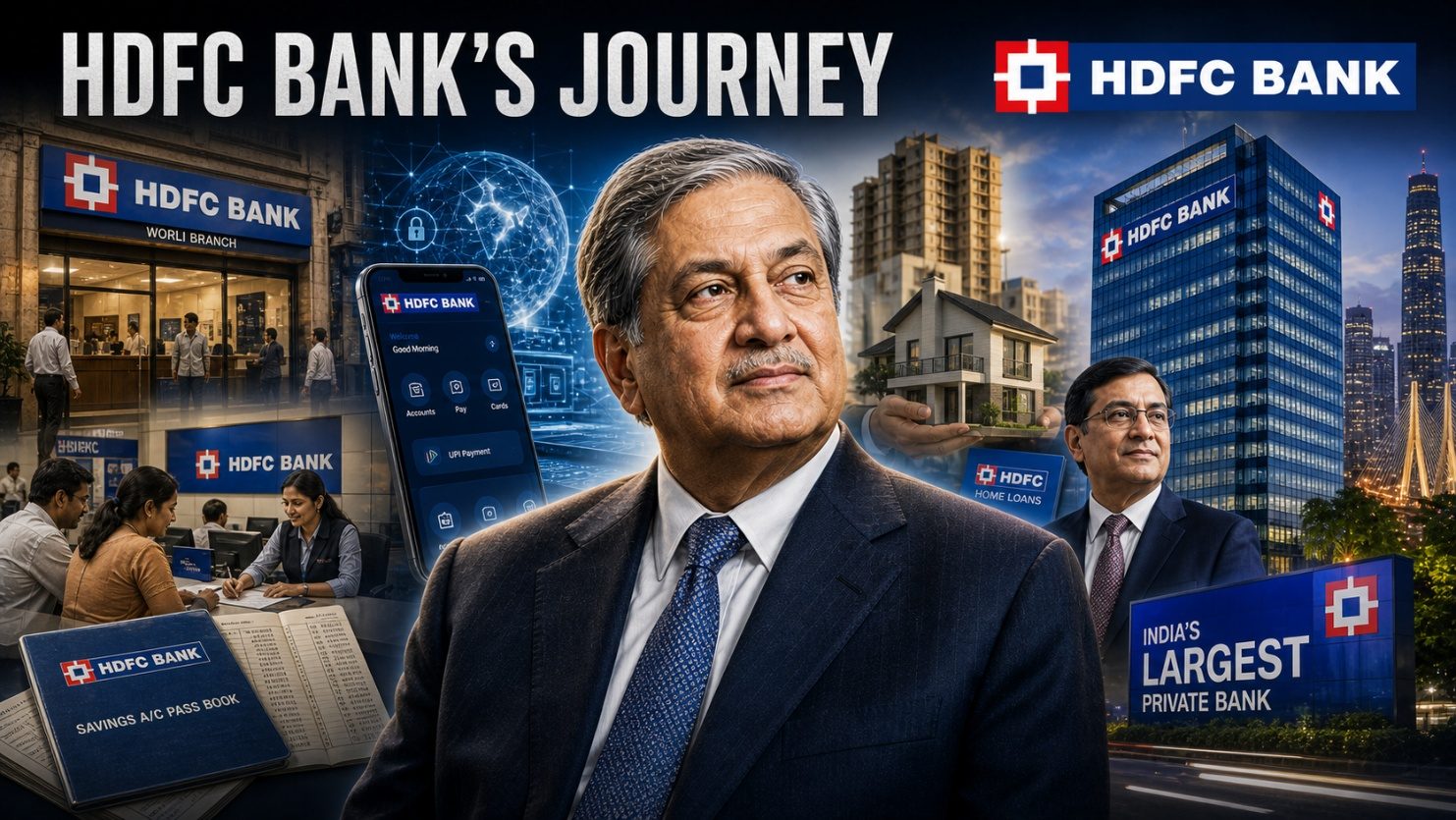
HDFC Bank has compounded for three decades on a single, unglamorous idea: build a deposit franchise one branch at a time, and let the loan book grow on the back of it. It does not chase cycles or market share, and for most of its life that discipline made it the most consistent compounder in Indian banking. Here is the journey, year by year.
- Founded in 1994 by Aditya Puri after the first post-liberalisation private banking licences; listed in 1995 at ₹10 a share.
- It came through the 2008 crisis with gross bad loans under 1.5%, a fraction of the industry, and never stopped compounding.
- The July 2023 merger with parent HDFC Ltd created a balance sheet above ₹30 lakh crore overnight, one of the largest bank mergers ever.
- By 2026 it is India’s largest private bank with the sector’s cleanest credit book, finally being re-rated as one merged institution.
1994 Aditya Puri founds HDFC Bank after the RBI grants the first batch of private banking licences, taking a 50% pay cut to leave Citibank Malaysia for the job.
1995 The bank lists at ₹10 a share and opens its first branch in Worli, Mumbai, the start of a deposit franchise built branch by branch.
2001 It becomes one of the first Indian banks to list American Depositary Receipts on the New York Stock Exchange, opening the door to global capital.
2008 It rides out the global financial crisis with a gross non-performing-loan ratio under 1.5%, while industry-wide ratios run several times higher.
2014 Deposits cross ₹3.5 lakh crore as the franchise compounds quietly through India’s growth years.
2017 HDFC Bank overtakes ICICI in deposits to become India’s largest private-sector bank.
2020 Aditya Puri retires after 26 years at the helm, handing over to Sashidhar Jagdishan in a closely watched succession.
Jul 2023 The merger with parent HDFC Ltd completes, one of the largest banking mergers in history, and the combined balance sheet crosses ₹30 lakh crore overnight.
2024 The bank works through merger integration; its loan-to-deposit ratio comes under pressure and the stock underperforms after 25 years of near-uninterrupted compounding.
Apr 2026 In the fourth quarter of FY26, net interest margin stabilises quarter-on-quarter for the first time in two years, deposit costs ease, and asset quality stays the best in private banking.
2026 HDFC Bank stands as India’s largest private lender with the cleanest credit book in the sector, and the market is finally re-rating the merged entity as a single institution rather than two.
The pattern is the point
HDFC Bank does not chase cycles or market share; it builds deposits one branch at a time and lets the asset book compound on top. Across three economic cycles, that patience produced the most consistent compounder in Indian banking, and even the bumpy post-merger years look, in hindsight, like a pause rather than a break in the trend. The boring institution tends to win, eventually, on every screen that matters.