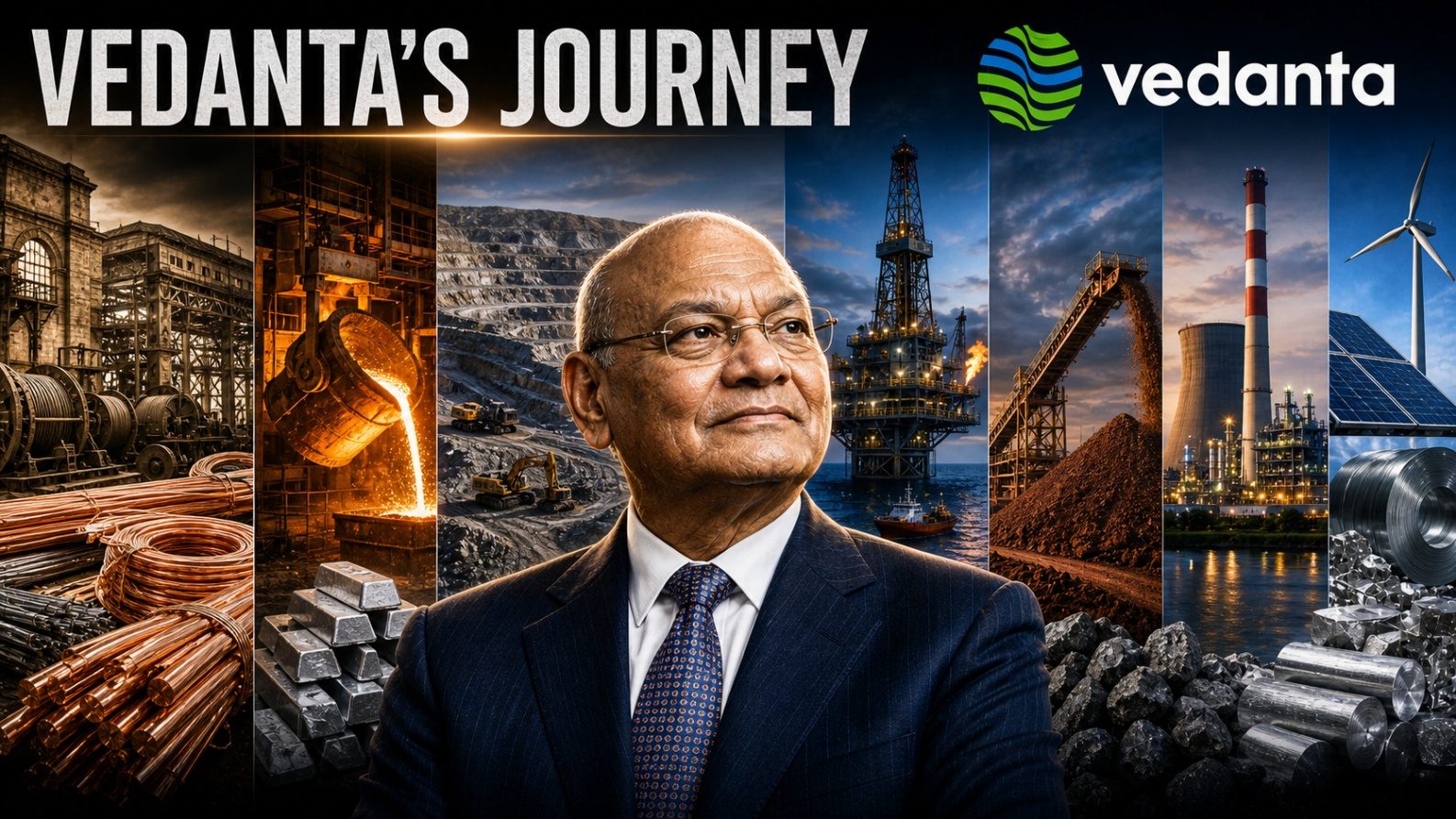
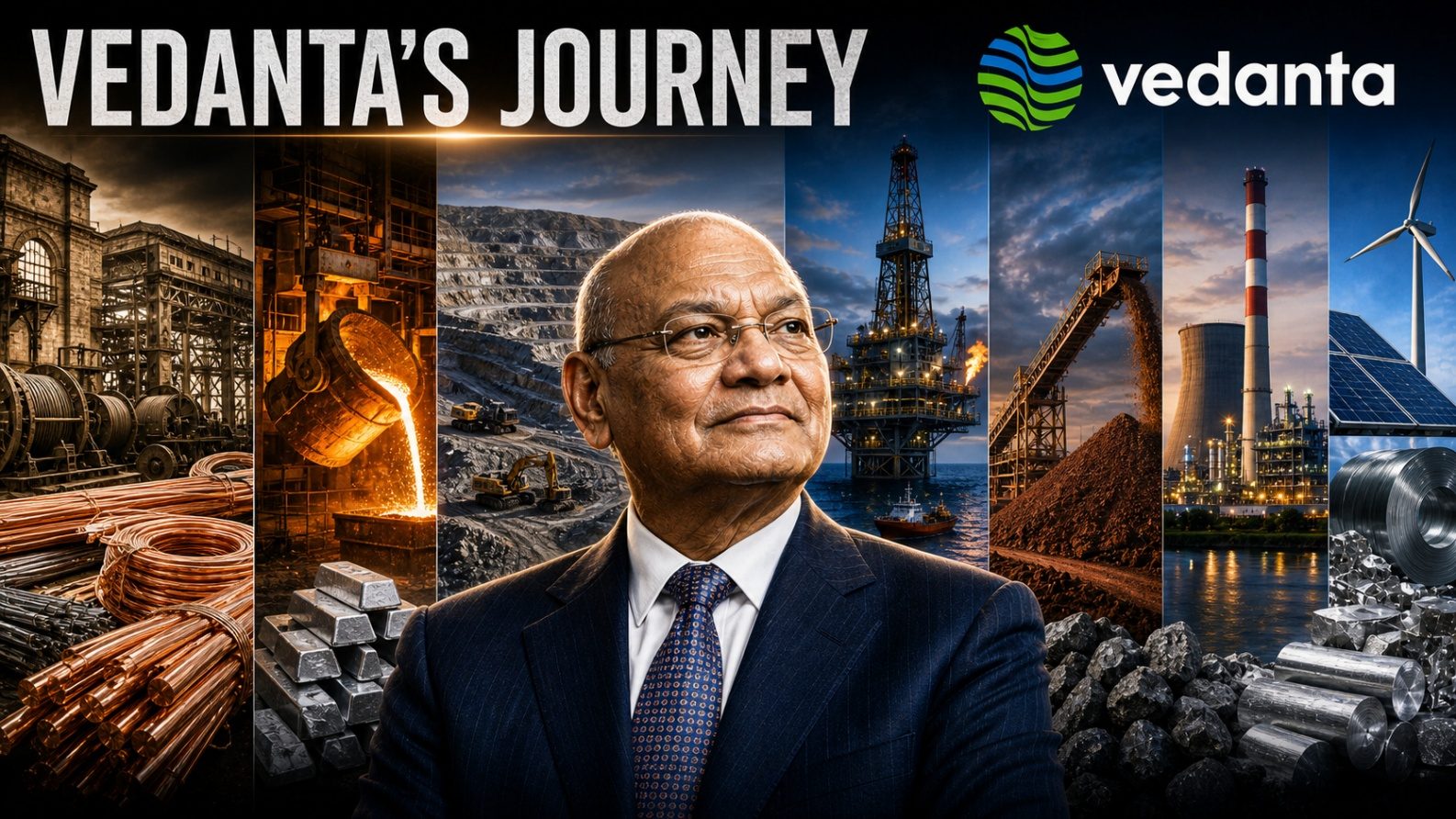
Vedanta is a roll-up of cyclical commodity assets, aluminium, zinc, oil, copper, iron ore, bought near the bottom and held through controversies that would have ended other companies. Tuticorin, Cairn, the dividend wars, a failed delisting: each chapter looked terminal at the time, and the cash flows kept coming. Now the group is splitting itself into five. Here is the journey, year by year.
- Founded as Sterlite Cables in 1976; Anil Agarwal took the helm after Sterlite Industries listed in 1986.
- Vedanta Resources listed in London in 2003, the first Indian-promoted company to do so as a primary entity.
- It acquired Cairn India for $8.7 billion in 2011, becoming a major oil and gas producer.
- A five-way demerger announced in 2023 will split the group into separate listed metals, energy and power businesses.
1976 Dwarka Prasad Agarwal founds Sterlite Cables in Bombay.
1986 Sterlite Industries lists, and Dwarka’s son Anil Agarwal takes the wheel.
2003 Vedanta Resources lists on the London Stock Exchange, the first Indian-promoted company to list as a primary entity in London.
2007 It acquires Sesa Goa, entering iron ore.
2011 Vedanta buys Cairn India from Cairn Energy for $8.7 billion, becoming one of India’s largest oil and gas producers.
2012–2014 Its Sterlite Copper plant at Tuticorin becomes embroiled in environmental protests.
2018 The Tuticorin plant is shut by the Tamil Nadu government after police action.
2020 A first attempt to delist Vedanta fails as public shareholders hold out for a higher price.
2023 Hindustan Zinc dividend and asset-sale battles flare as the Government of India, a roughly 30% shareholder, blocks several Vedanta-led capital actions.
2023 Vedanta announces a five-way split, carving out aluminium, oil and gas, power, and iron and steel as four new listed companies while the residual Vedanta Ltd retains base metals (zinc and copper).
2025 The demerger receives NCLT clearance and each business begins preparing for separate listing.
2026 The demerger completes as the four new entities list on 15 June; Hindustan Zinc remains majority-held, leaving five distinct commodity vehicles for investors to allocate against the cycle.
The pattern is the point
Vedanta is cyclical assets bought at the bottom and held through controversies, Tuticorin, Cairn, the dividend wars, the failed delisting, each of which looked terminal in the moment while the cash flows kept coming. The bet underneath is simple: hard commodity assets, largely amortised, in a country running short on nearly every metal it needs. The demerger is an attempt to let the market price each of those cycles on its own.