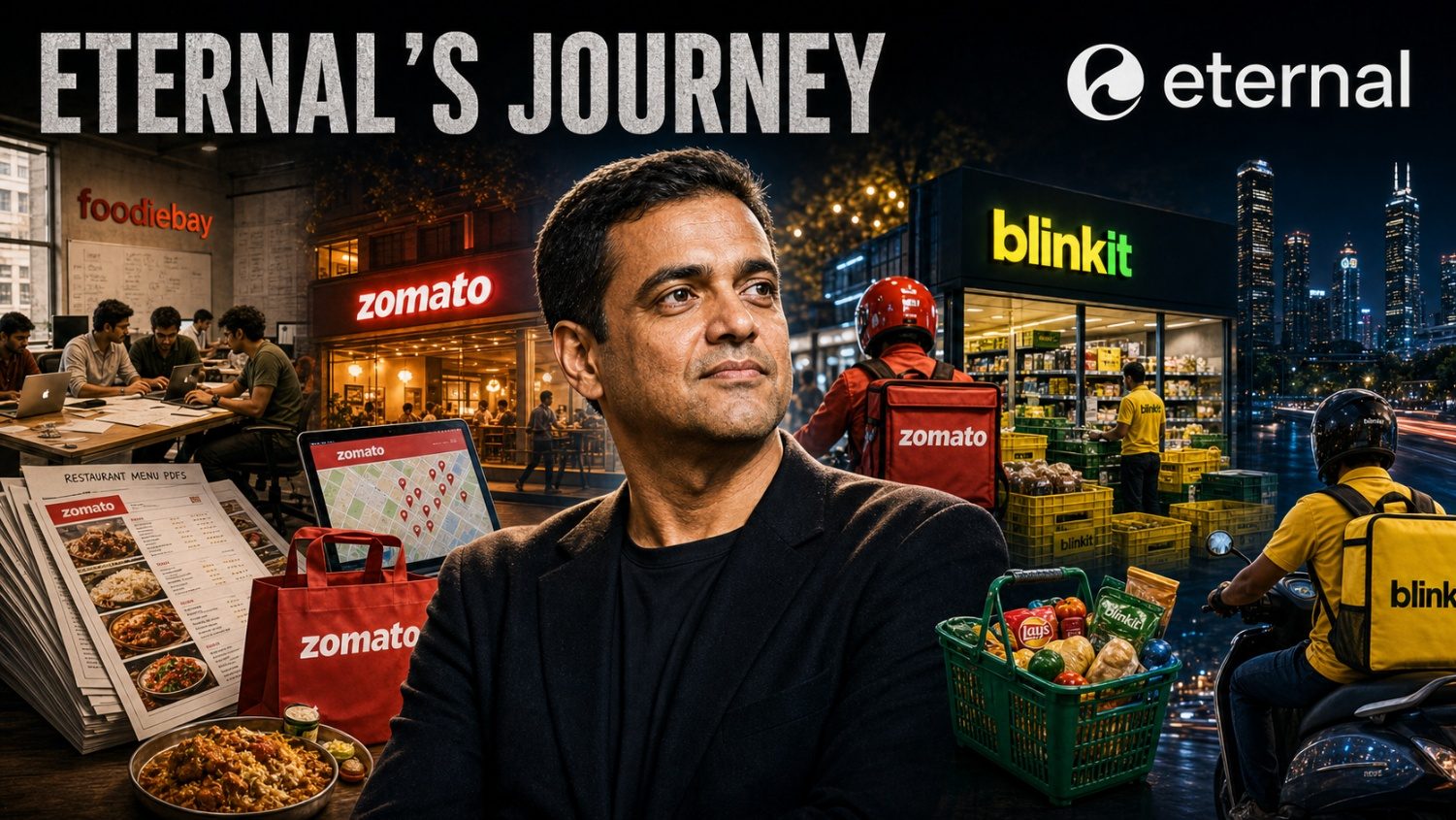
Eternal, the company most Indians still know as Zomato, has made a habit of doing the unpopular thing and being proved right a few years later. From listings to delivery, from food to a quick-commerce acquisition the market called a money pit, each pivot cost money up front and bought a decade of optionality. Here is the journey, year by year.
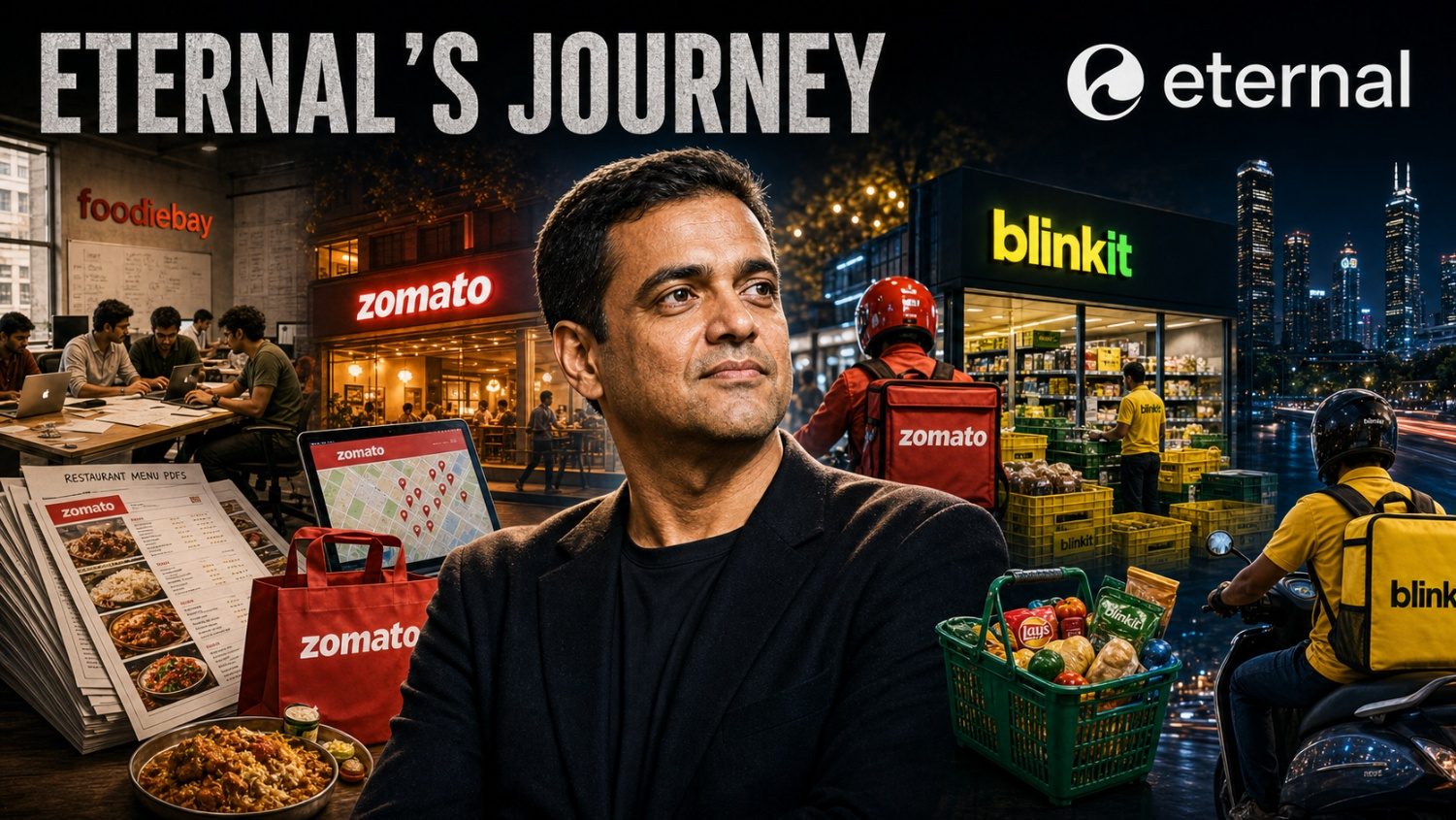
- Started in 2008 as Foodiebay, a menu-PDF aggregator built on an office network; renamed Zomato in 2010.
- Its July 2021 IPO at ₹76 was the largest Indian tech listing of its time, then fell below issue price for 18 months.
- The 2022 Blinkit acquisition (₹4,447 crore), mocked as a money pit, became its most valuable franchise.
- By 2026 Blinkit handles over a million orders a day and the parent, renamed Eternal, trades well above its IPO price.
2008 Bain analysts Deepinder Goyal and Pankaj Chaddah build a food-menu PDF aggregator on the office network and call it Foodiebay.
2010 It is renamed Zomato and becomes a restaurant search-and-reviews platform.
2014 Zomato pivots from listings to food delivery, unpopular at the time, but the start of the real business.
2020 It acquires Uber Eats India, becoming one of the country’s two food-delivery majors alongside Swiggy.
Jul 2021 Zomato’s IPO at ₹76 a share is the largest Indian tech listing to date; the stock then trades below issue price for 18 months.
2022 It acquires Blinkit for ₹4,447 crore. The market calls it a money pit.
2023 Zomato posts its first quarterly profit as Blinkit’s growth accelerates.
2025 The parent is renamed Eternal Limited, with Zomato, Blinkit and Hyperpure sitting beneath it.
2025 Blinkit overtakes Zomato in monthly transacting users; quick commerce becomes the growth story food delivery alone could never have been.
2026 Eternal trades at multiples of its 2021 IPO price, Blinkit handles over a million orders a day, and the once-derided acquisition is India’s most valuable quick-commerce franchise.
The pattern is the point
Every pivot was unpopular in the moment, listings to delivery, food-only to category expansion, and a struggling quick-commerce buy that looked like a cash drain. Each cost money, and each bought a decade of optionality. The valuation, in the end, accrued to the company willing to solve hard logistics problems before the market understood the unit economics.