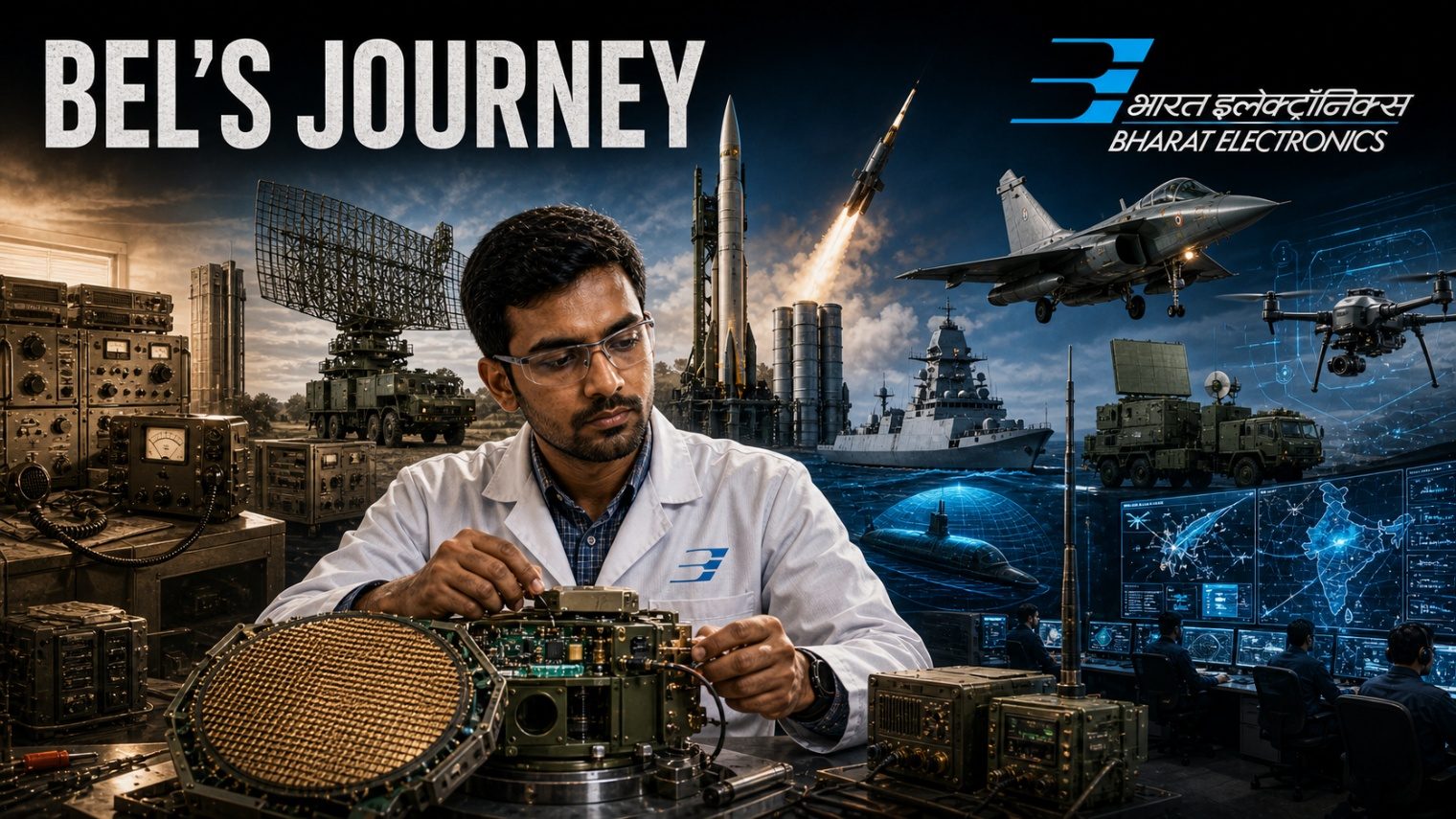
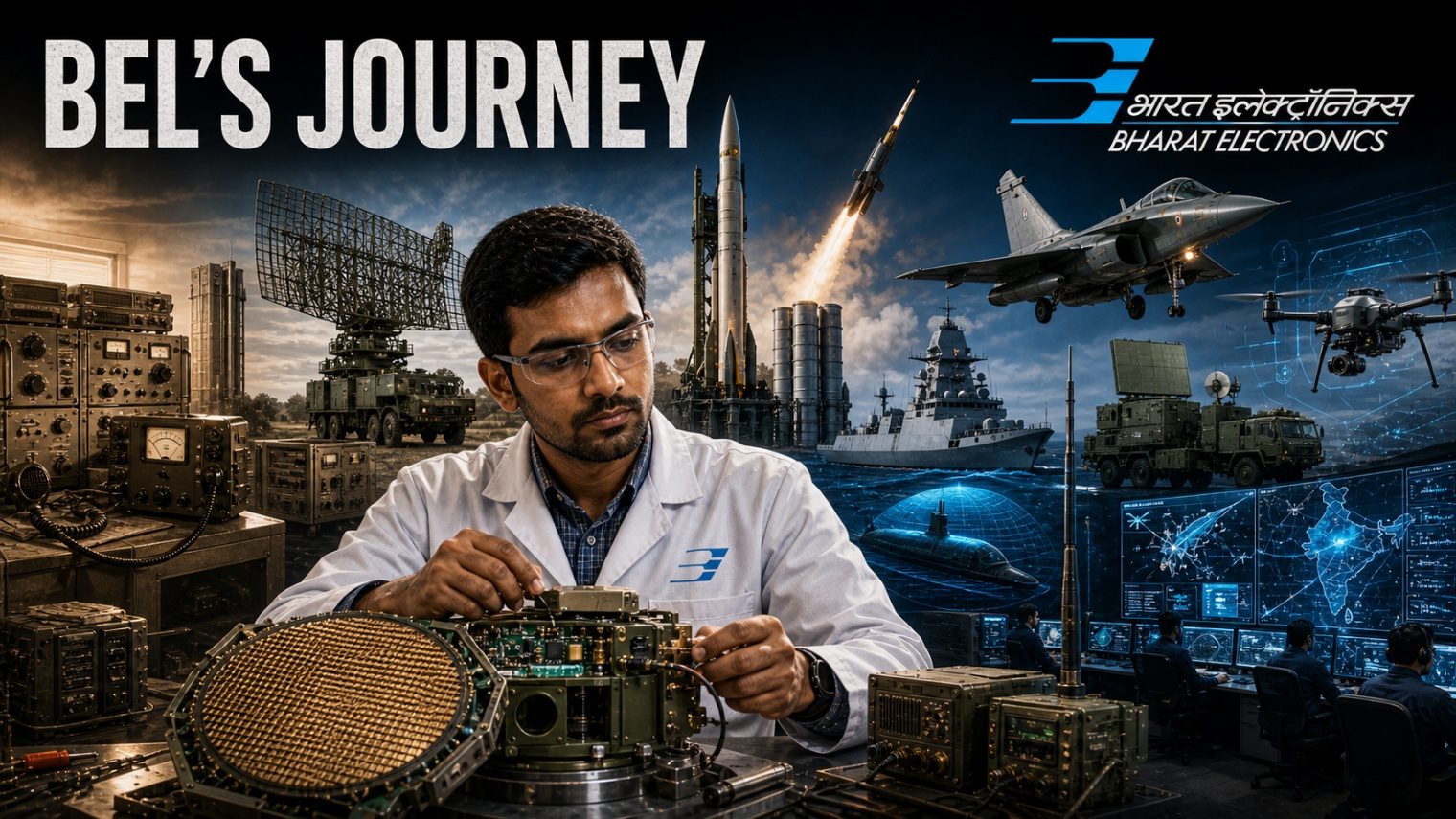
Bharat Electronics never tried to become an aerospace prime or a shipbuilder. It picked one role, defence electronics, and stayed inside it for seventy years. Every Indian fighter, warship and missile programme now runs on BEL hardware, and a niche owned for half a century has quietly become a monopoly the market is finally paying up for. Here is the journey, year by year.
- Founded in 1954 to make communication gear for the armed forces, BEL built India’s first indigenous radar in the 1960s.
- It became India’s first defence PSU to win Navratna status in 2007.
- It anchors the electronics of the Akash, Astra and BrahMos missile programmes and most Indian radar and sonar systems.
- By FY26 its order book topped around ₹74,000 crore in the strongest year of its seven-decade history.
- 1960s BEL builds the first indigenous radar for the Indian Air Force, beginning its move up the technology ladder.
- 1970s It expands into missile electronics and naval sonars, embedding itself across the services.
- 2010s BEL moves into network-centric warfare systems, Akash missile electronics and battlefield-management systems.
- Q4 FY26 BEL reports record quarterly revenue and profit with an order book around ₹74,000 crore, the strongest year in its history.
1954 Founded in Bangalore to manufacture basic communication equipment for the Indian armed forces.
1989 BEL establishes a Software Development Centre, an early bet on the software side of defence systems.
2007 It becomes India’s first defence PSU to be granted Navratna status, with greater operational autonomy.
2018 It wins lead roles across the Akash, Astra and BrahMos missile-electronics ecosystems.
2022 Tejas avionics, surveillance-radar contracts and defence-corridor allocations broaden the order pipeline.
2024 The order book crosses ₹70,000 crore and BEL begins manufacturing drone payloads.
2025 It wins quick-reaction surface-to-air missile orders along with several international contracts.
2026 It is the backbone of India’s electronic-warfare, radar, sonar and missile programmes, having paid a dividend yield consistently above 1.5% through the entire compounding run.
The pattern is the point
BEL did not need to become an aerospace prime to compound. It chose one niche and stayed there for seven decades, until owning that niche became owning a monopoly. Every Indian fighter, warship and missile programme runs on its hardware, and niches held for fifty years eventually become the kind of franchise the market pays a premium for.