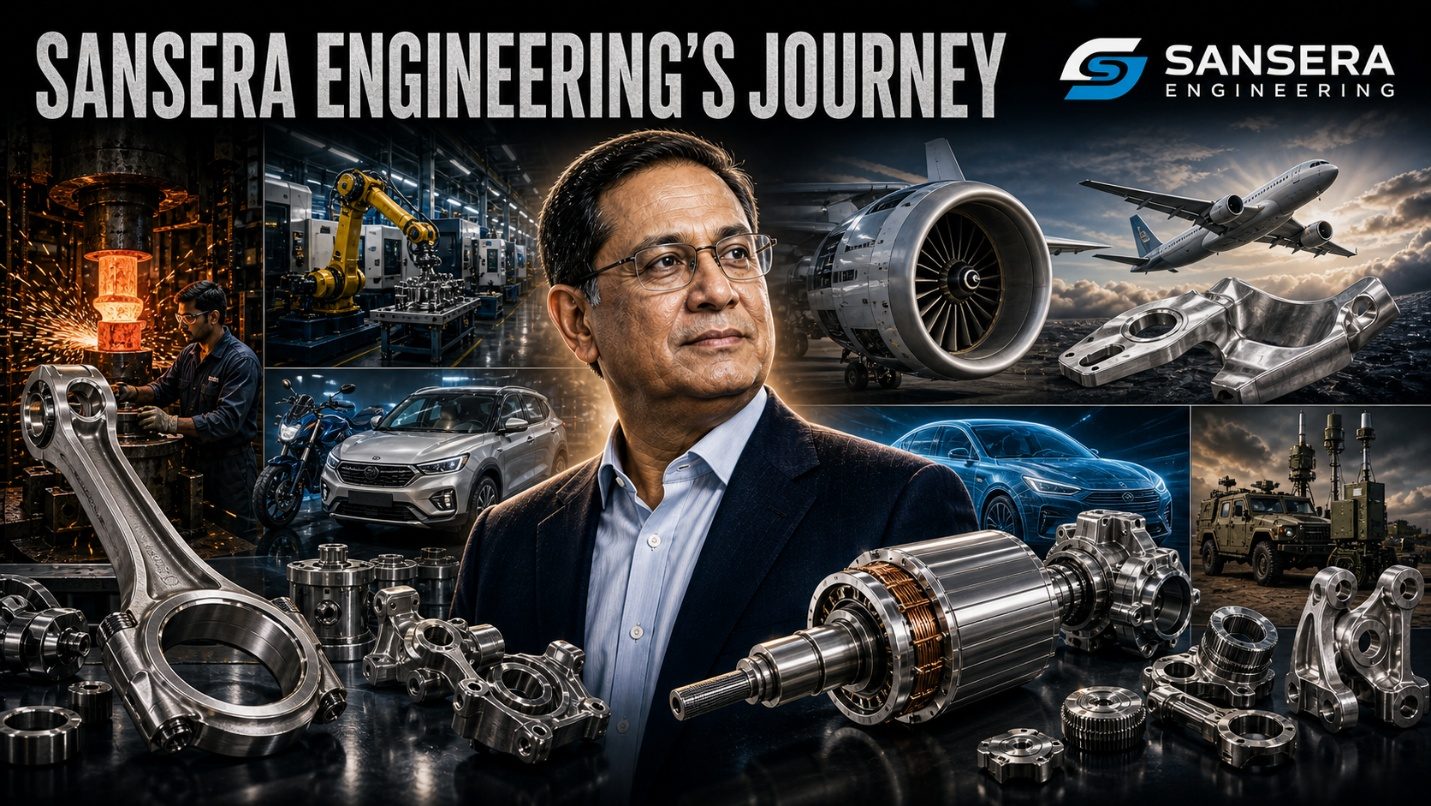
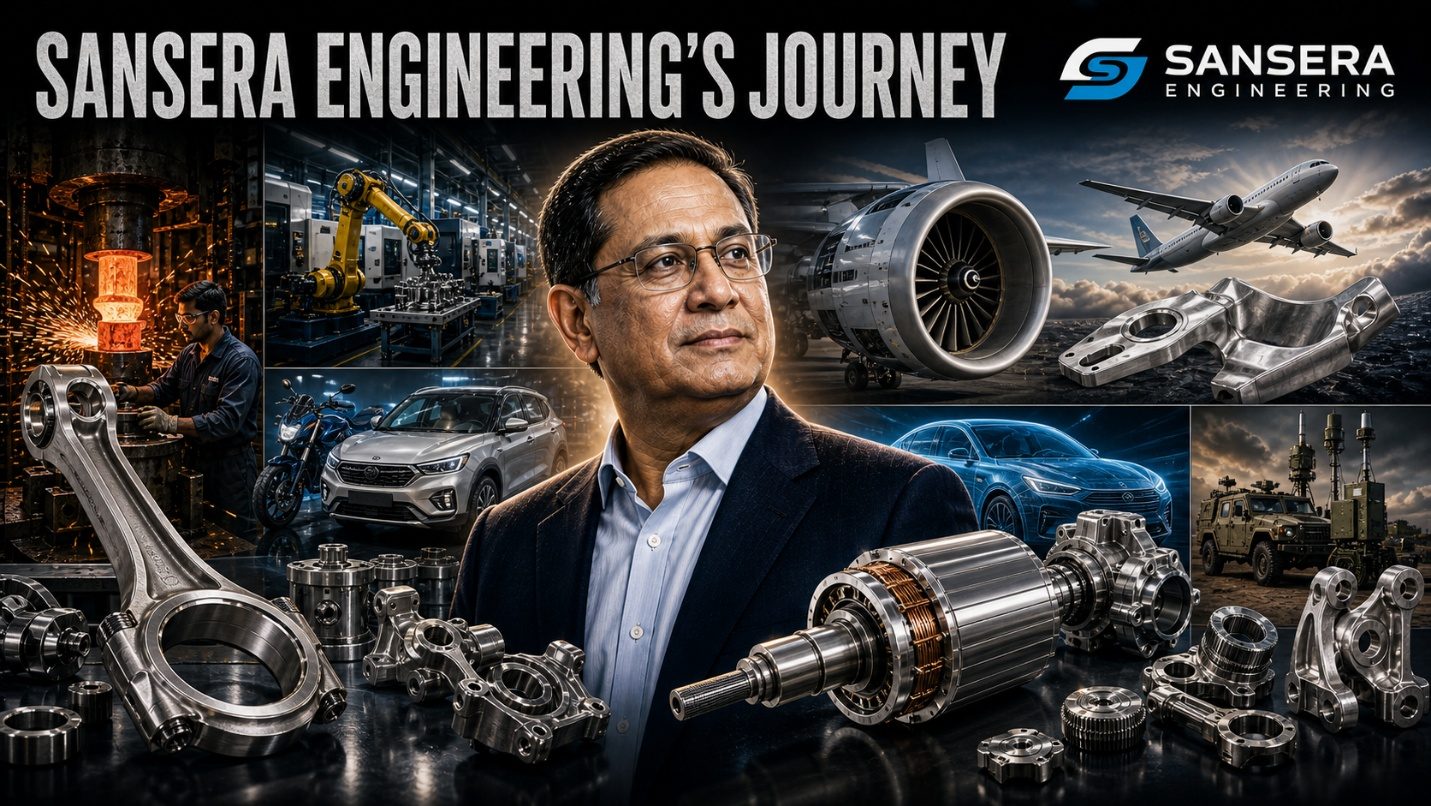
Sansera made the boring parts inside nearly every Indian two-wheeler. The EV transition was supposed to threaten that business, instead, the same precision capability was redirected to make EV gearboxes, motor shafts and aerospace forgings. The same hands, the same tolerances, the next powertrain. Here is the journey, year by year.
- Founded in Bangalore in 1981, starting with connecting rods for two-wheeler engines.
- It became a leading supplier of precision-forged parts to Bajaj, Hero, TVS, Honda, Maruti, BMW and more.
- From 2022 it diversified into EV components and then aerospace and defence forgings.
- By FY25 revenue topped ₹3,000 crore with EV and aerospace becoming meaningful lines and an order book of around ₹1,850 crore.
- FY25 Revenue tops ₹3,000 crore, with EV components and aerospace becoming meaningful lines and an order book of around ₹1,850 crore.
1981 Founded in Bangalore as a precision auto-components maker, its first product connecting rods for two-wheeler engines.
1995 It becomes a leading Indian supplier of precision-forged components for two-wheelers, passenger and commercial vehicles.
2010 Its customer roster expands to Bajaj, Royal Enfield, Hero, TVS, Honda, Maruti, BMW and global OEMs.
Sep 2021 Sansera lists at ₹744.
2022 Diversification into EV components begins, with tech-led parts for electric two- and three-wheelers.
2023 Aerospace and defence components are added, easing the concentration in internal-combustion parts.
2024 EV-component revenue scales and new facilities at Pune and Coimbatore are commissioned.
2025 Aerospace forging for global commercial and defence aircraft begins, with EV components and aerospace flagged as the primary growth verticals.
2026 Three engines compound together, internal-combustion parts throw off cash, EV components scale, and aerospace forging adds high-margin defence and commercial customers.
The pattern is the point
Sansera made the parts inside every Indian two-wheeler, and the EV transition that was supposed to threaten that business instead became an opportunity: the same precision capability now makes EV gearboxes, motor shafts and aerospace forgings. The same hands and the same tolerances simply moved to the next powertrain.