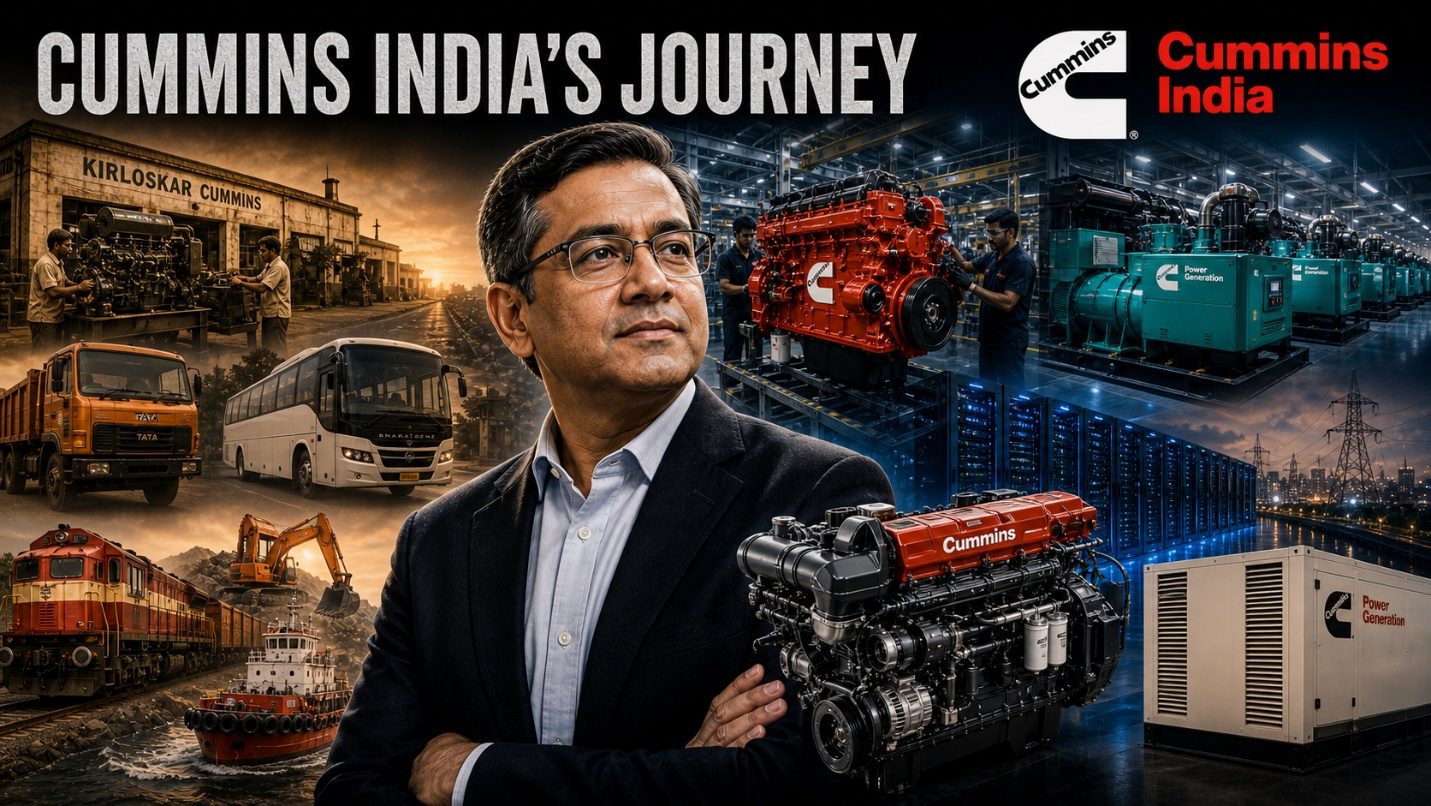
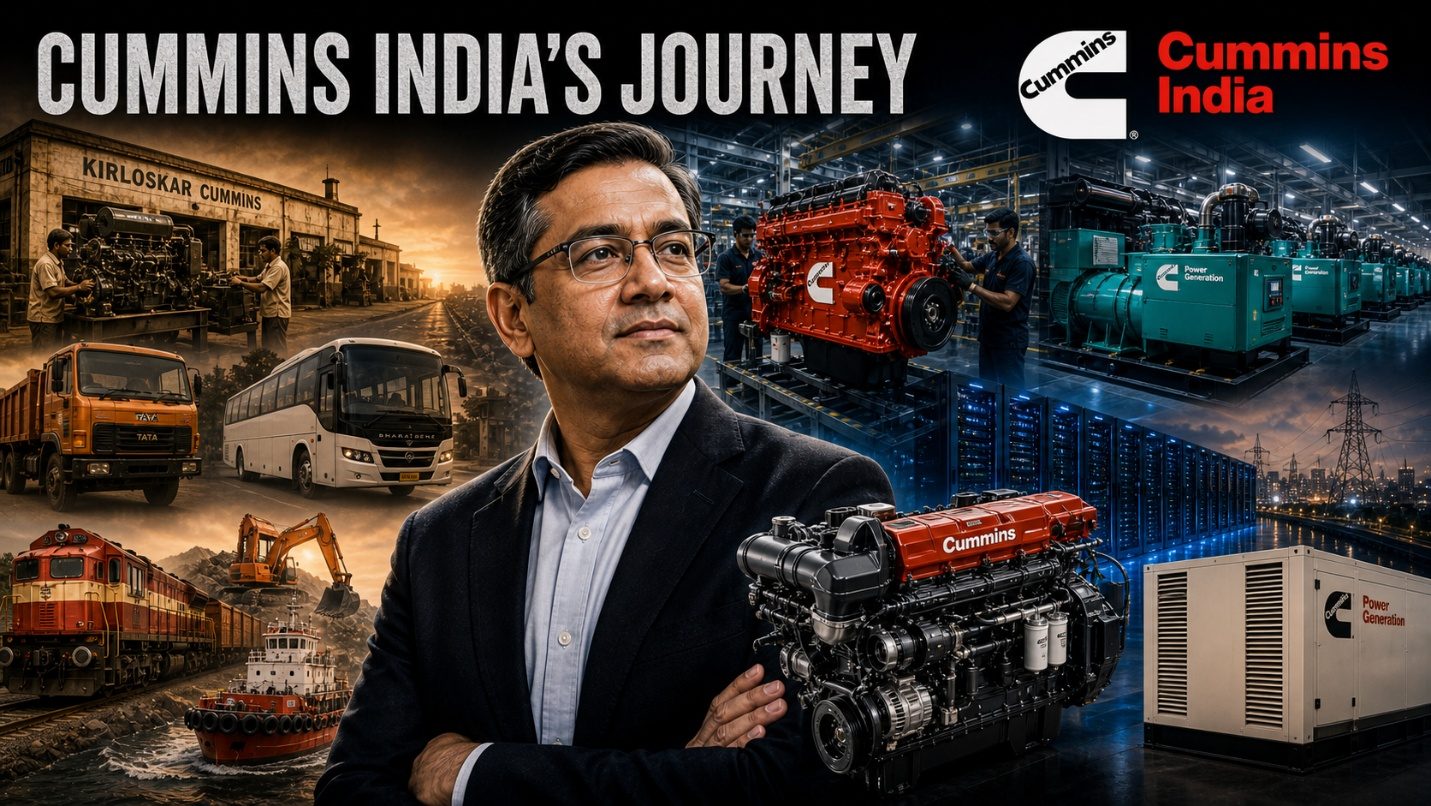
Cummins has been India’s largest diesel-engine maker for sixty years, and for most of that time the market treated it as a cyclical industrial. The data-centre boom changed the framing: the same gensets that once rose and fell with the capex cycle have become a structural rent. The same engine, in a different cycle, gets paid a different multiple. Here is the journey, year by year.
- Founded in 1962 as Kirloskar Cummins, a JV with Cummins Inc of the US.
- It became a Cummins Inc subsidiary in India in 1997 and diversified into power generation through the 2000s.
- The data-centre build-out from 2023 created a structural demand cycle for large gensets.
- By FY25 revenue topped ₹10,000 crore with profit above ₹1,900 crore and margins around 20%.
- FY25 Revenue tops ₹10,000 crore with profit above ₹1,900 crore and an operating margin around 20%.
1962 Founded as Kirloskar Cummins Limited, a joint venture between the Kirloskar Group and Cummins Inc of the United States.
1975 It powers India’s commercial-vehicle, construction-equipment, rail and marine fleets.
1997 Cummins Inc consolidates global ownership, and it becomes a Cummins Inc subsidiary in India.
2000s It diversifies into power generation, making gensets a parallel franchise.
2018 Margin pressure from emission norms and the CPCB IV+ transition delays orders.
2023 The data-centre build-out, in India and globally, creates a structural demand cycle for large gensets.
2024 The order book hits record levels as the CPCB IV+ transition is fully absorbed.
2025 Genset revenue accelerates on data-centre orders and the industrial-engine business recovers, with data centres and the CPCB IV+ ramp flagged as key drivers.
2026 The stock crosses all-time highs as the genset business turns from cyclical into structural.
The pattern is the point
Cummins has been India’s largest diesel-engine maker for sixty years, and the market kept treating it as cyclical. The data-centre cycle turned the genset business into a structural rent, the same engine, used in a different cycle, simply gets paid a different multiple. Re-rating sometimes comes not from a new product but from a new use for an old one.