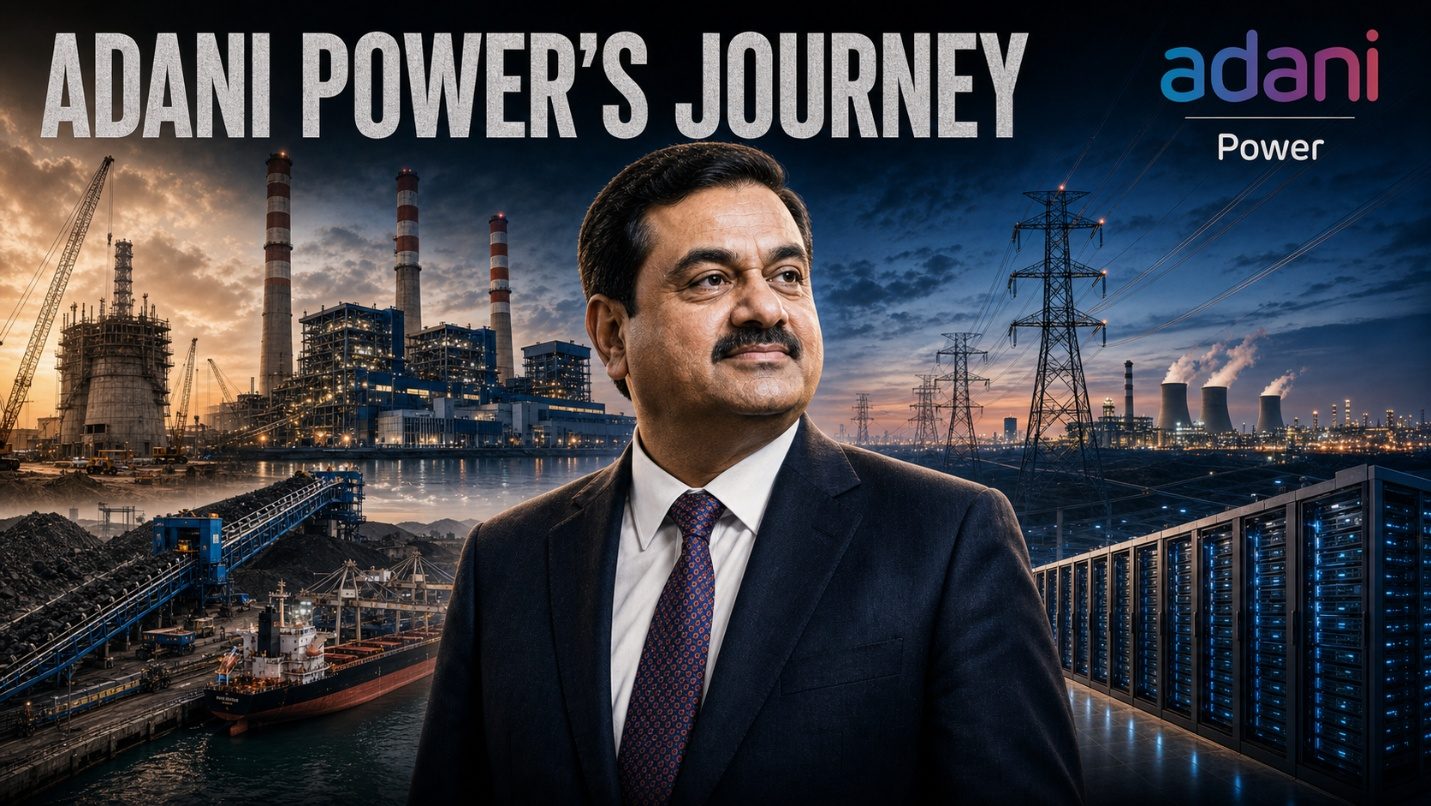
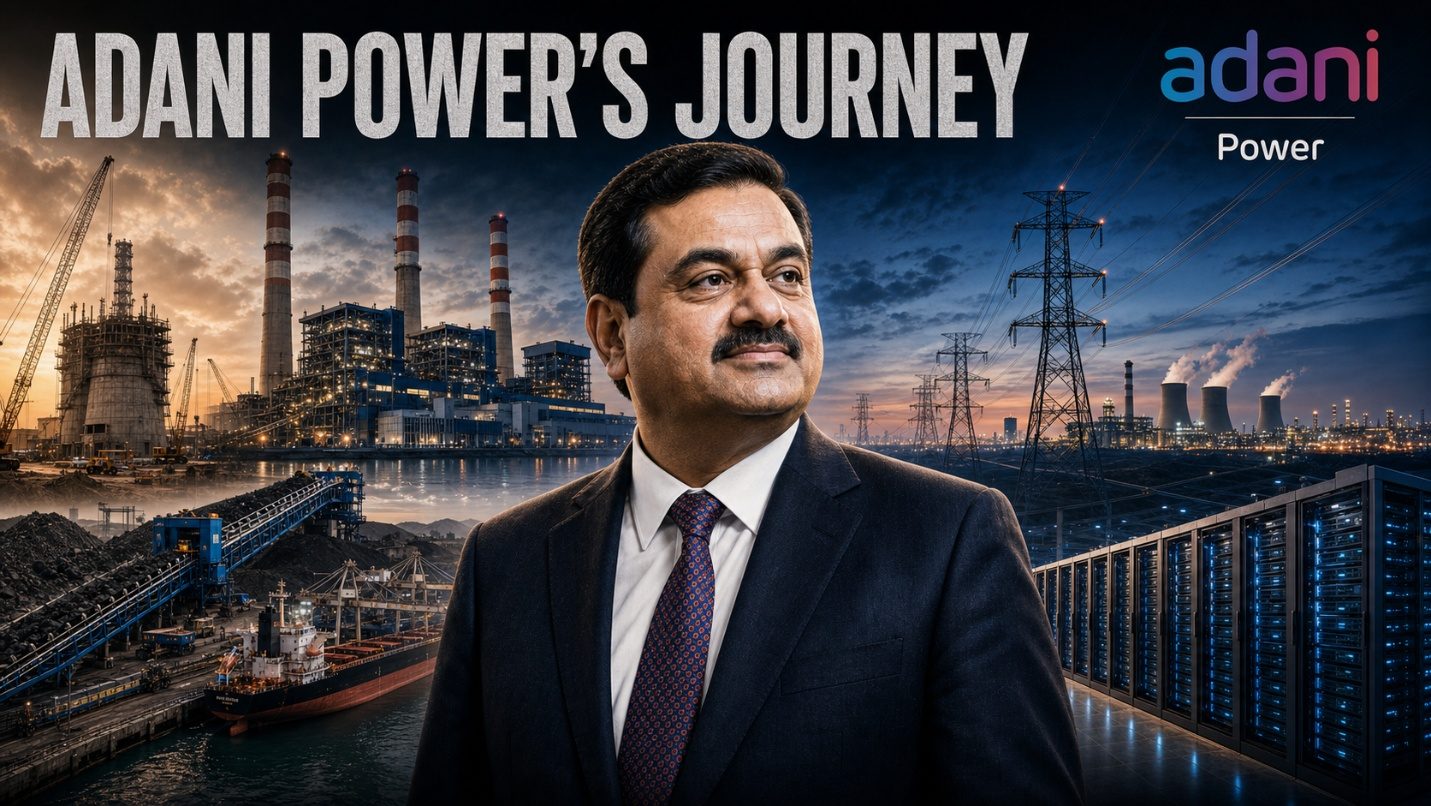
The market wrote off India’s thermal independent power producers after the brutal 2014–2018 stress cycle. Adani Power did the opposite, it kept buying distressed thermal assets at distressed prices through the worst of it. The next cycle is now being paid for by the patient buyer who acquired the assets when no one else would. Here is the journey, year by year.
- Incorporated in 2002; its 2009 IPO was India’s first large private-sector thermal IPP listing, subscribed 21x.
- It weathered power-purchase-agreement disputes and a debt restructuring in the 2010s.
- From 2021 it pivoted to acquiring distressed thermal assets, over 5 GW since, at low prices.
- By FY26 revenue reached around ₹58,000 crore and profit approached ₹13,000 crore, with ~18 GW of capacity.
- Q4 FY26 Consolidated profit reaches ₹4,271 crore, up 64% year-on-year, on revenue of ₹15,059 crore.
- FY26 Revenue runs around ₹58,000 crore and profit approaches ₹13,000 crore as multiple acquired plants contribute fully.
2002 Adani Power is incorporated on 22 August to build the group’s first thermal power plants.
2009 Its IPO at ₹100 on 20 August, India’s first private-sector thermal IPP at scale, is subscribed 21x.
2012 Aggressive capacity addition continues, and the Mundra plant in Gujarat is fully commissioned.
2014–2017 Power-purchase-agreement disputes with state utilities weigh on margins.
2018–2020 Debt restructuring and asset rationalisation follow.
2021 A strategic pivot begins as Adani Power starts acquiring distressed thermal assets at distressed prices.
2022–2024 It acquires Lanco Amarkantak, GMR Chhattisgarh, DB Power and Korba West.
Aug 2024 It acquires Coastal Energen (1,200 MW) at Tuticorin, taking total acquired capacity since 2021 above 5 GW.
2026 With roughly 18 GW of installed thermal capacity, management targets 41.87 GW by FY32.
The pattern is the point
The market wrote off Indian thermal IPPs after the 2014–2018 stress cycle, but Adani Power kept buying through the stress. The next cycle is paid for by the patient buyer who acquired the assets when no one else would, cyclical commodity assets, bought at the bottom and owned by the most patient hand.