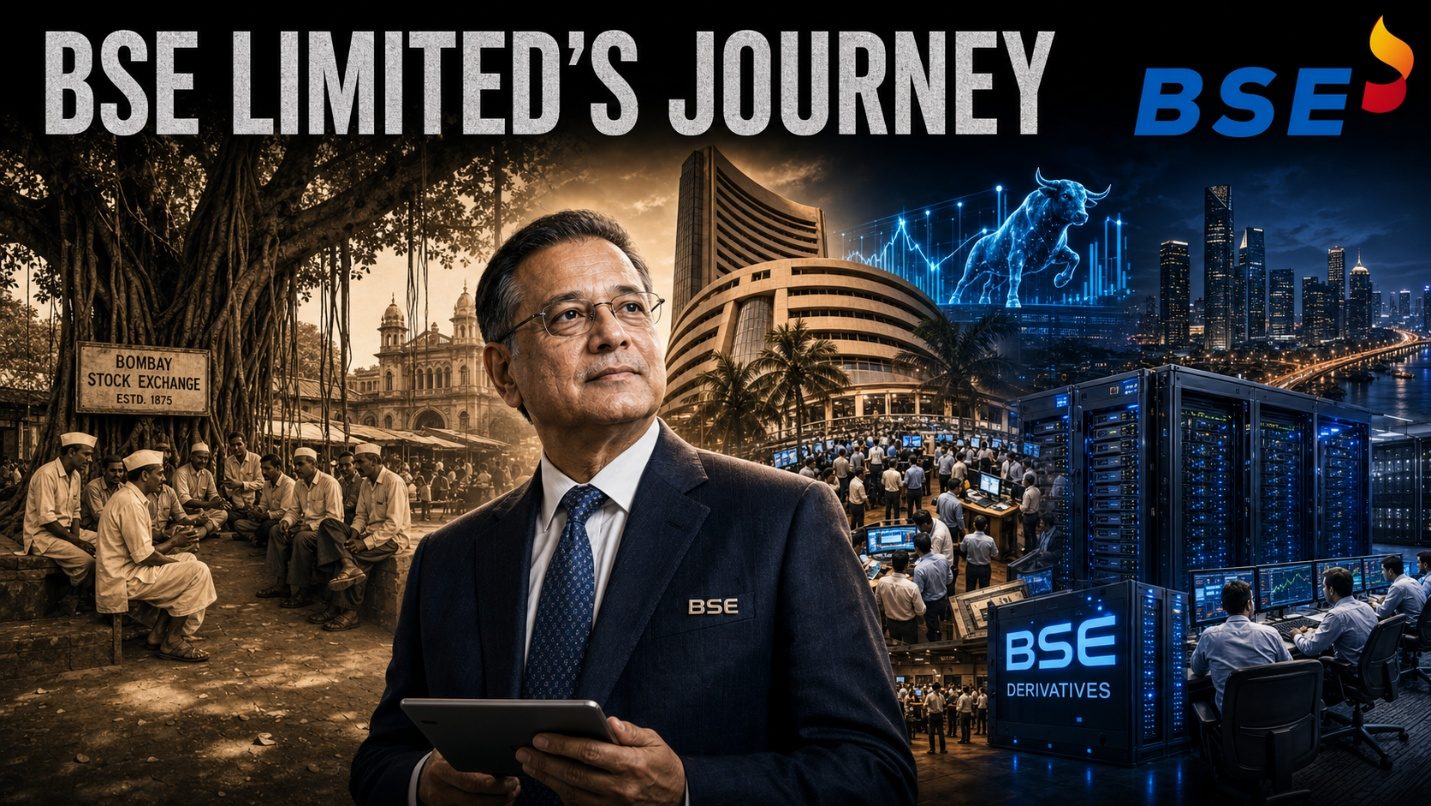
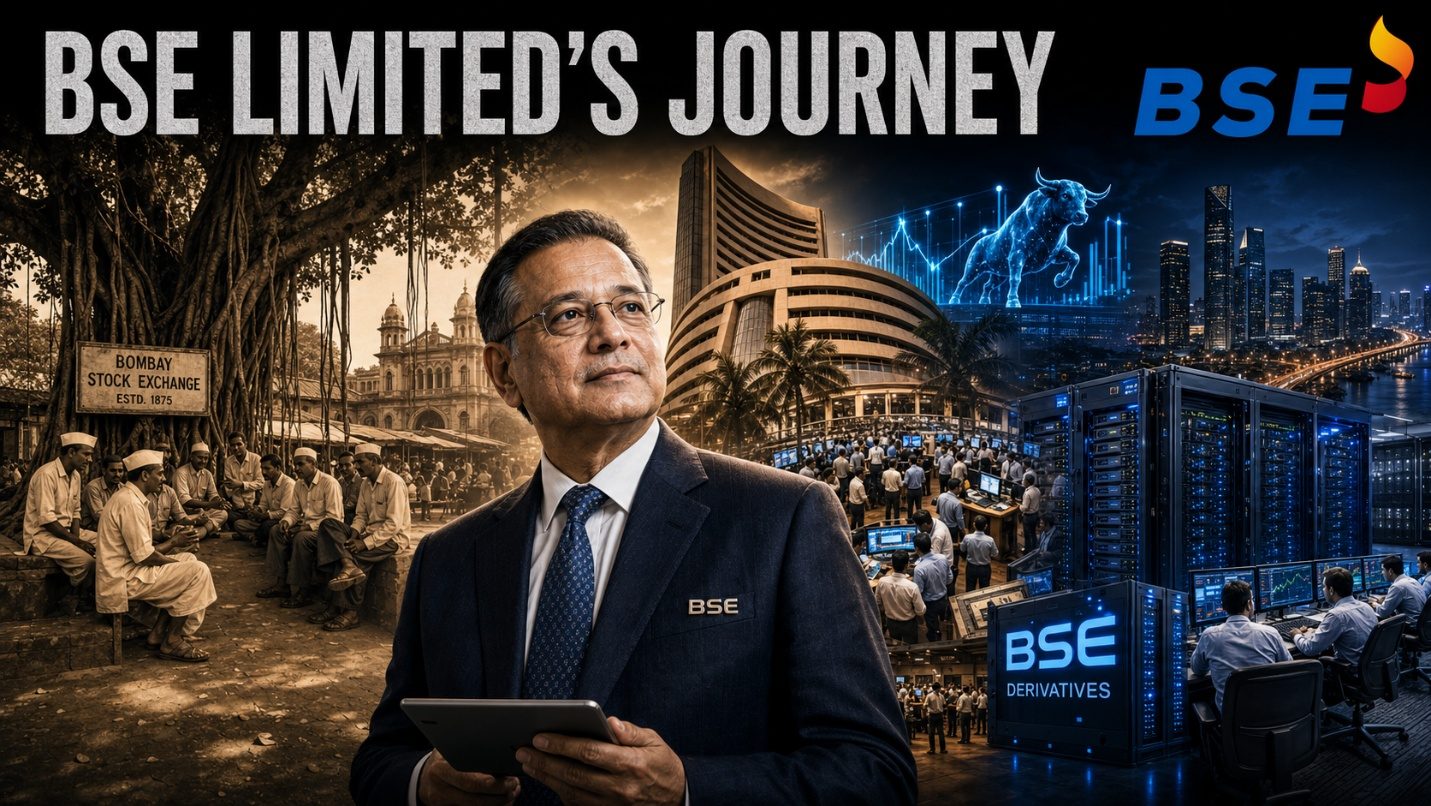
BSE spent two decades as a sleepy exchange while NSE took the derivatives market. Then a single strategic reset, viable Sensex and Bankex weekly options, changed its trajectory in one year. The infrastructure layer of Indian capital markets is a duopoly, and owning the second player when it stops being asleep was the trade. Here is the journey, year by year.
- Founded in 1875 under a banyan tree in Bombay, it is Asia’s oldest stock exchange.
- It launched the SENSEX in 1986 and listed itself (on NSE) in 2017.
- A 2023 relaunch of Sensex and Bankex weekly options saw volumes explode within months.
- By FY25 revenue topped ₹3,000 crore with profit above ₹1,300 crore and operating margins near 60%.
- FY25 Revenue tops ₹3,000 crore with profit above ₹1,300 crore and operating margins near 60%.
1875 Founded as The Native Share and Stock Brokers’ Association under a banyan tree at Horniman Circle, Bombay, Asia’s oldest stock exchange.
1957 It becomes the first stock exchange recognised by the Government of India under the Securities Contracts Regulation Act.
1986 The SENSEX, India’s first equity benchmark index, is launched on 1 January.
1992–2000 Liberalisation and the rise of NSE reshape Indian capital markets, with NSE taking the derivatives market.
2005 BSE demutualises.
2017 BSE lists itself, on the NSE, on 3 February.
2020–2022 Its mutual-fund, bond and SME platforms scale.
May 2023 BSE restarts a viable derivatives product around Sensex and Bankex weekly options, and volumes explode within months.
2024 Record derivatives notional and accelerating SENSEX licensing revenue follow.
2026 With cash volumes at all-time highs and derivatives notional among the largest in the world, BSE is a credible duopolist alongside NSE, its stock having compounded several times in two years.
The pattern is the point
BSE spent two decades asleep while NSE owned derivatives, and the strategic reset around Sensex and Bankex options changed everything in a single year. The infrastructure layer of Indian capital markets is a duopoly, and owning the second player just as it stops being asleep is the kind of asymmetric trade the numbers here describe.