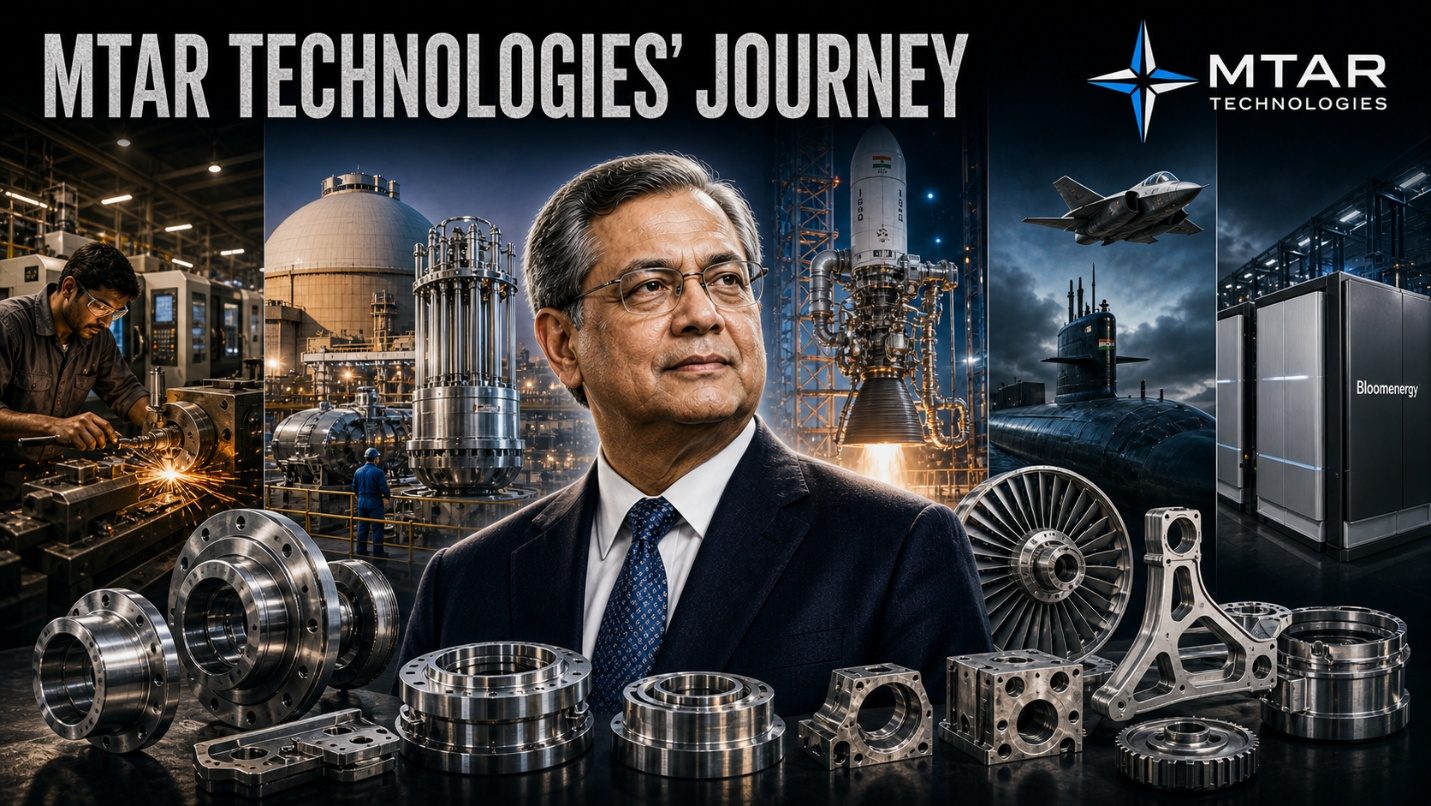
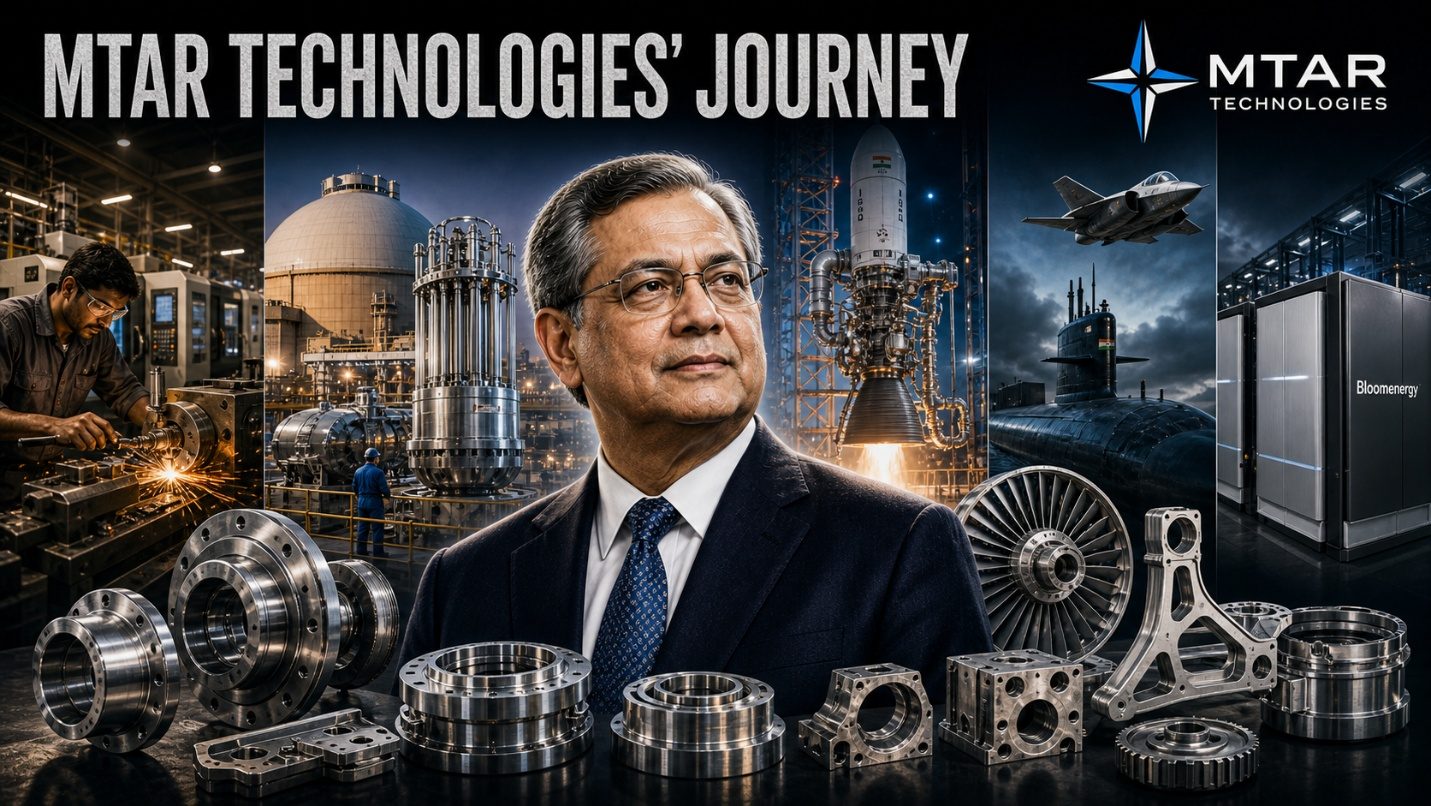
MTAR is not really in any single trend. It sits in the picks-and-shovels layer of five different strategic cycles at once, atomic energy, space, defence, clean energy and, lately, civilian aerospace, machining the precision parts each of them depends on. Here is the journey of a fifty-five-year-old precision shop, year by year.
- Founded in 1970 in Hyderabad as a precision-engineering shop, with the Department of Atomic Energy as its first customer.
- It became a space-grade supplier to ISRO (cryogenic engine components) and a defence supplier for the nuclear-submarine programme.
- A 2010 qualification by Bloom Energy made fuel cells a fourth pillar, tied to the US data-centre build-out.
- Its 2021 IPO was subscribed 200x; FY26 guidance is for over 70% revenue growth across its verticals.
- FY25 Revenue is around ₹676 crore with an order book of around ₹980 crore.
- FY26 Management guides for over 70% revenue growth, driven by the Bloom Energy ramp, indigenous defence orders and new clean-energy wins, with new facilities being commissioned.
1970 P. Ravinder Reddy and K. Satyanarayana Reddy found MTAR in Hyderabad as a precision-engineering shop, its first customer the Department of Atomic Energy.
1980 It becomes a trusted vendor for the Bhabha Atomic Research Centre, making fuel-handling and reactor pressure-vessel components.
1995 ISRO awards MTAR the contract to make cryogenic engine components for the GSLV, turning the shop into a space-grade supplier.
2003 Defence customers are added, including components for India’s nuclear-submarine programme.
2010 Bloom Energy of California qualifies MTAR as a fuel-cell hot-box component supplier, making clean energy a fourth pillar.
Mar 2021 MTAR’s IPO at ₹575 is subscribed 200x and lists at ₹1,064, an 85% premium.
2022 Bloom Energy revenue compounds with the US data-centre build-out, diversifying the order book.
2024 Indian Navy submarine-programme contracts ramp, and Tejas avionics housings are added.
2026 Four verticals run simultaneously, atomic, aerospace, defence and fuel cells, each in a multi-year capex cycle, with civilian aerospace and AMCA components in development.
The pattern is the point
MTAR is not riding one trend; it sits in the picks-and-shovels layer of five strategic cycles at once, and the precision parts get machined by a company that has been doing exactly this for fifty-five years. Niches owned for half a century turn into monopolies the customer cannot easily replace, which is why a single precision shop can ride atomic, space, defence and clean-energy demand together.