- A 100% year, but a two-stock story: Samsung and SK Hynix make up about half of the KOSPI, the rally is narrow, not broad.
- Two engines: a deliberate "Value-up" governance re-rating (Commercial Act reform, effective 22 July 2025) plus an AI-memory (HBM) chip mania.
- Volatile, not one-way: an intraday record near 8,930 on 2 June was followed by a ~16% drop and an 8 June circuit breaker, then a recovery above 8,700.
- Locals held it up: record foreign net outflows were offset by leveraged domestic retail buying.
- Two watch-points: the MSCI developed-market review (decision due ~23 June; effective ~2027–28 if upgraded), and, for India, the lesson that index concentration cuts both ways.
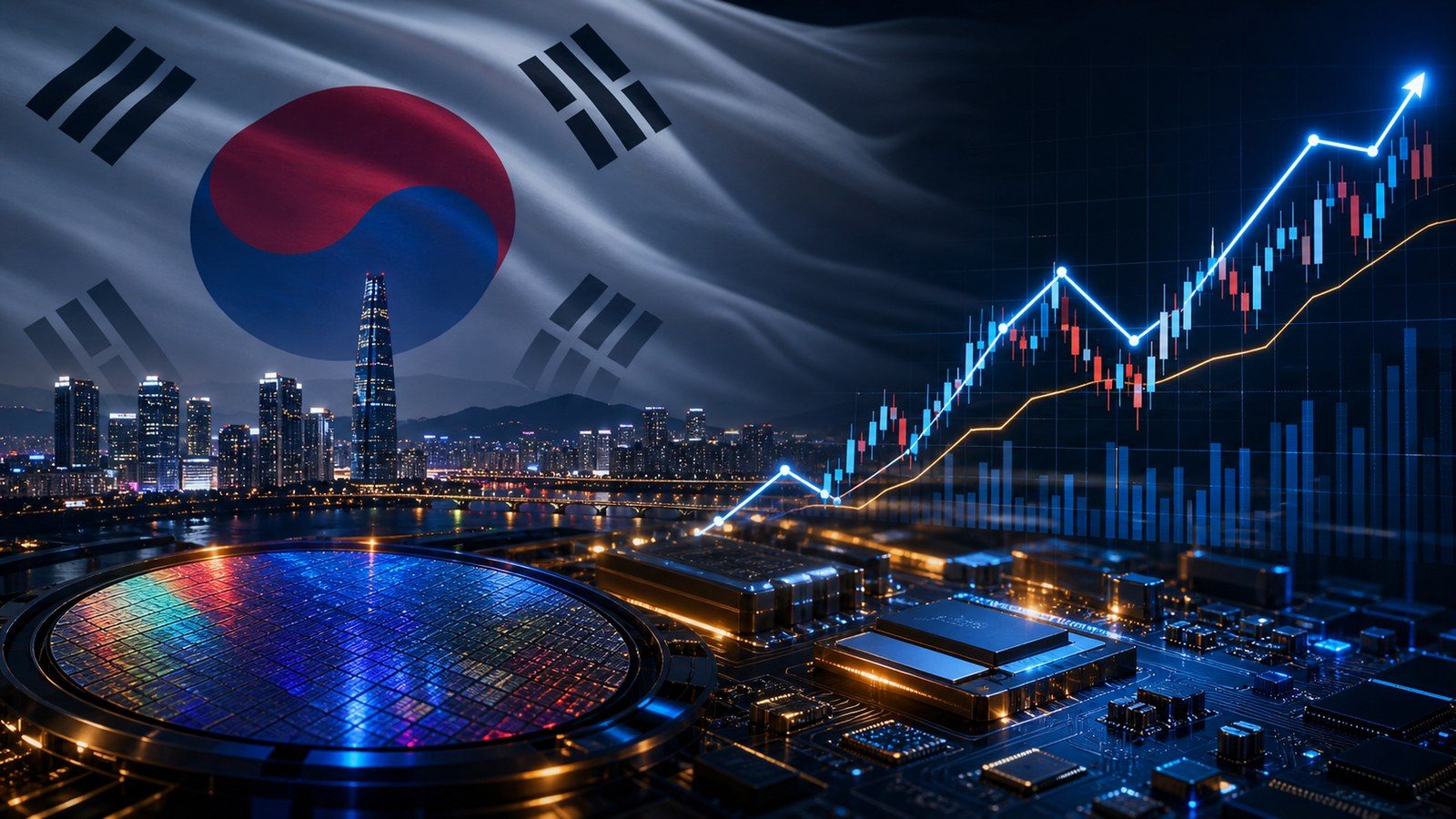
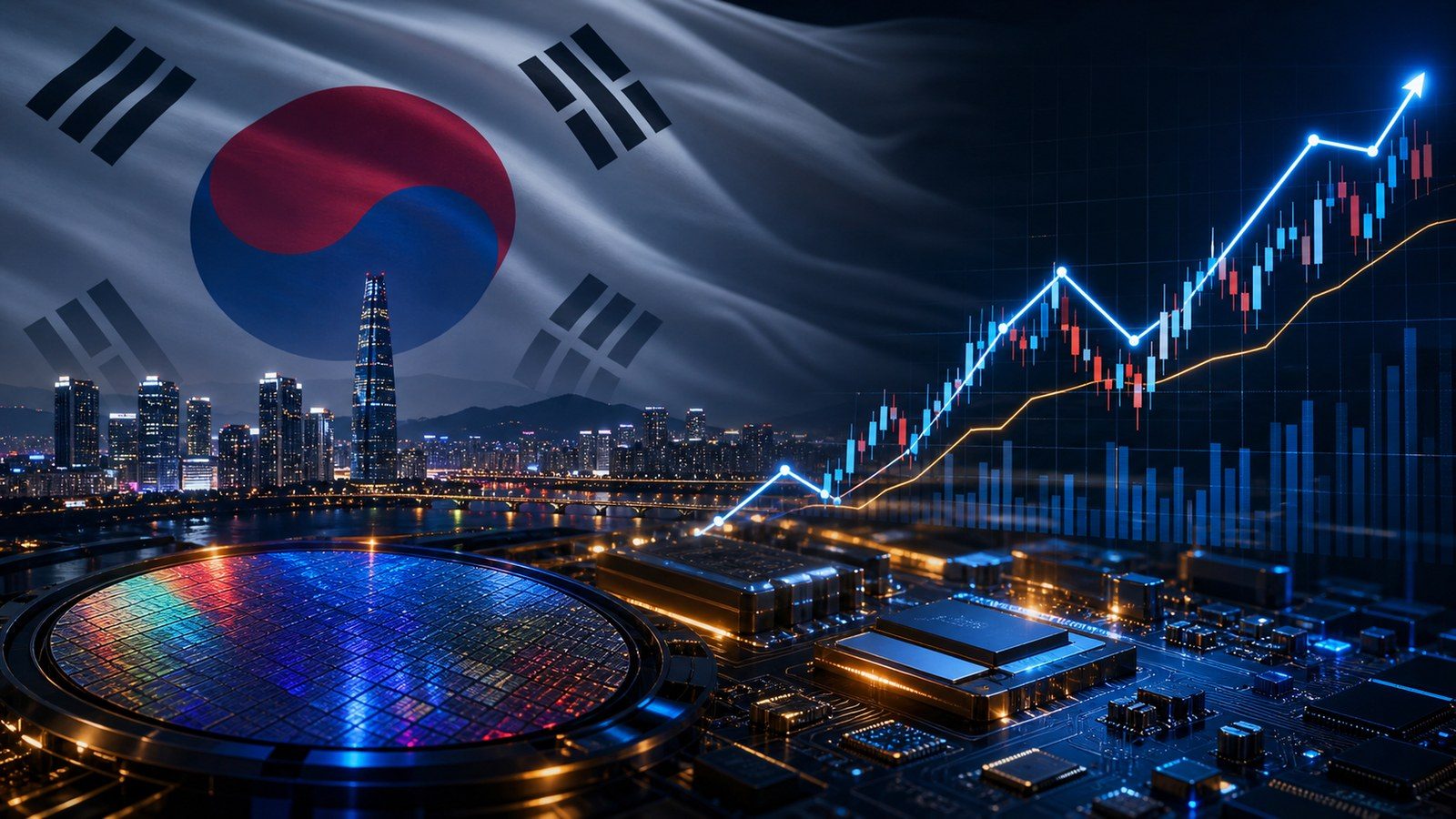
- In a year when most of the world’s stock markets did very little, South Korea’s did something extraordinary: it doubled. The KOSPI, Seoul’s main index, has roughly doubled in 2026, the best performance of any major market on Earth. It smashed through 5,000, a level President Lee Jae-myung had promised on the campaign trail and most thought fanciful, and kept going, past 6,000, 7,000 and 8,000, to an intraday high near 8,930 in early June. And then, in the space of a few sessions it fell about 16%, one of those days tripping a rare market-wide circuit breaker, before climbing back above 8,700. If that sounds like two different markets fighting inside one number, that is exactly what it is. Korea’s rally is the most interesting equity story in the world right now, not because it doubled, but because of what is, and is not, driving it.
Engine one: a re-rating the government engineered on purpose
The first engine is a genuine, deliberate attempt to fix one of the oldest problems in global investing: the “Korea discount,” the long-standing tendency of Korean companies to trade below the value of their own assets because minority shareholders came last, payouts were stingy, and family-run chaebols ran the show. What makes 2026 different is that the country elected a president who decided to do something about it. Lee Jae-myung, who, unusually, had himself been a loss-making retail day-trader before politics, won a snap election in June 2025 after his predecessor’s brief martial-law crisis, and ran on the slogan “KOSPI 5,000.” Within his first year he turned the slogan into statute. Korea expanded company directors’ fiduciary duty to cover all shareholders, not just the company; it made the cancellation of treasury shares mandatory, forcing firms to actually retire the stock they buy back; it created a lower tax rate on dividends from companies that pay out generously; and it scrapped a planned tax on retail trading gains that investors hated. It is also courting an upgrade to MSCI “developed market” status, which could pull tens of billions of dollars of passive money into Seoul if it lands around 2027–28. None of this is hype, it is enacted law, and it is the kind of slow, structural re-rating that can last for years. The discount is visibly narrowing: the market’s price-to-book ratio has risen from around 0.8 to roughly 1.3.
Engine two: a chip mania that is anything but durable
The second engine is louder, faster, and far less reassuring. Strip out two companies, Samsung Electronics and SK Hynix, and Korea’s miracle largely disappears. Those two memory-chip giants now make up about half of the entire KOSPI by value, and they delivered roughly 70% of the index’s gains this year. By one strategist’s reckoning, take them out and the KOSPI is sitting not at 8,700 but closer to 5,200. The reason they have flown is the artificial-intelligence boom: the world cannot get enough high-bandwidth memory, the specialised chips that feed AI accelerators, and SK Hynix in particular has become indispensable to Nvidia. SK Hynix stock is up nearly 190% this year on top of a 274% gain in 2025, and its first-quarter operating profit rose more than 400% at margins above 70%; Samsung, racing to catch up, saw profits surge too. This is a real boom built on real demand. But it is also a memory cycle, and memory cycles have always, eventually, busted, prices collapse once capacity catches up with demand. A market that is half-driven by the single most cyclical industry in technology is not the safe structural story it can look like from the headline number. The fragility showed in early June, when a single disappointing AI-chip forecast out of the United States was enough to knock about 16% off the index in days.
The tell: look at who is actually buying
The most revealing detail is who is, and is not, behind the rally. You might assume the world’s best-performing market is being swept up by eager foreign money. The opposite is true. Foreign investors have been record net sellers of Korean shares in 2026, pulling out something like $60 billion, the largest outflow in the country’s history, bigger than 2008 or 2020. What has powered the index instead is Korean retail investors, who have poured in tens of billions of their own money, much of it borrowed: margin debt has hit record levels around $39 billion. A rally led by leveraged locals while professionals head for the exits is not, historically, the most stable configuration. Two further cautions sit underneath. The Korean won has been weak, near its lowest in over fifteen years, which means a foreign investor earned far less than that headline 100% once the gains were converted back into dollars. And the early-June air pocket showed just how quickly a crowded, leveraged, two-stock market can drop when sentiment turns.
The number, and the argument over it
Here is the genuine surprise: even after doubling, Korea is not obviously expensive. Because corporate earnings, chip earnings especially, exploded even faster than share prices, the market’s forward price-to-earnings ratio actually fell over the year, to around 7 times, which makes Korea one of the cheapest major markets in the world; India, for comparison, trades near 22 times. That is why much of Wall Street is still bullish. Goldman Sachs lifted its KOSPI target to 12,000, Nomura to as high as 11,000, and “KOSPI 10,000” has become a mainstream call rather than a fantasy. The bull case, made well by local strategists, is that the re-rating has barely begun: outside the chipmakers there are still hundreds of Korean companies trading below book value while earning double-digit returns, exactly the mispricing the reforms are designed to cure. The bears counter that the cheap headline multiple is a memory-cycle illusion, pay seven times peak earnings and you may be paying a fortune once the cycle turns, and that the concentration and leverage make a sharp correction a question of when, not if. Both can be true at once, which is precisely the point: the durable engine and the dangerous one are bolted to the same index.
The mirror for Indian investors
For investors in India, Korea is not a far-off curiosity; it is a mirror, and an uncomfortable one. Through 2026, global money has been rotating out of India and into markets like Korea and Taiwan. Foreign investors have pulled roughly $30 billion from Indian equities this year, India’s weighting in global emerging-market funds has fallen to a multi-year low, and the Nifty has gone roughly nowhere, down on the year while Korea doubled. Part of the reason is simply price: India still trades around 22 times forward earnings, while Korea re-rated from a deep discount and still sits near 7 to 11. But part of it is the very thing Korea has just demonstrated, that a government can choose to close a valuation gap by forcing better governance, higher payouts and friendlier tax treatment, and be rewarded with a wave of domestic capital and a global re-rating. India’s reform-minded investors have argued for years that the country needs its own “value-up”; Korea has now run the experiment in public. The lesson, though, cuts both ways. Korea’s example shows the prize for real reform, but its 100% melt-up, led by two stocks and a wall of retail leverage, is also a textbook picture of how enthusiasm outruns fundamentals. The takeaway for an Indian investor is not “sell India, buy Korea.” It is that re-ratings are made by policy and flows, not by hope, and that even a genuine one can be hijacked by a mania you would not want to be holding when the cycle turns.
The takeaway
None of this diminishes what Korea has achieved. The reforms are real, the discount is narrowing, and the AI-memory boom rests on demand that is not going away tomorrow. But the single most important thing to understand about the KOSPI’s astonishing year is that it is two stories wearing one number: a slow, structural re-rating that could run for years, and a fast, cyclical, leveraged chip trade that could reverse in months. The reform is the story that matters; the chip cycle is the story that shouts. The danger, for Koreans, and for the foreigners now being tempted back, is mistaking the second for the first. Watch three things from here: whether the rally broadens beyond Samsung and SK Hynix, whether foreign investors turn from sellers into buyers, and where the memory cycle goes next. They will tell you which engine is really flying the plane.