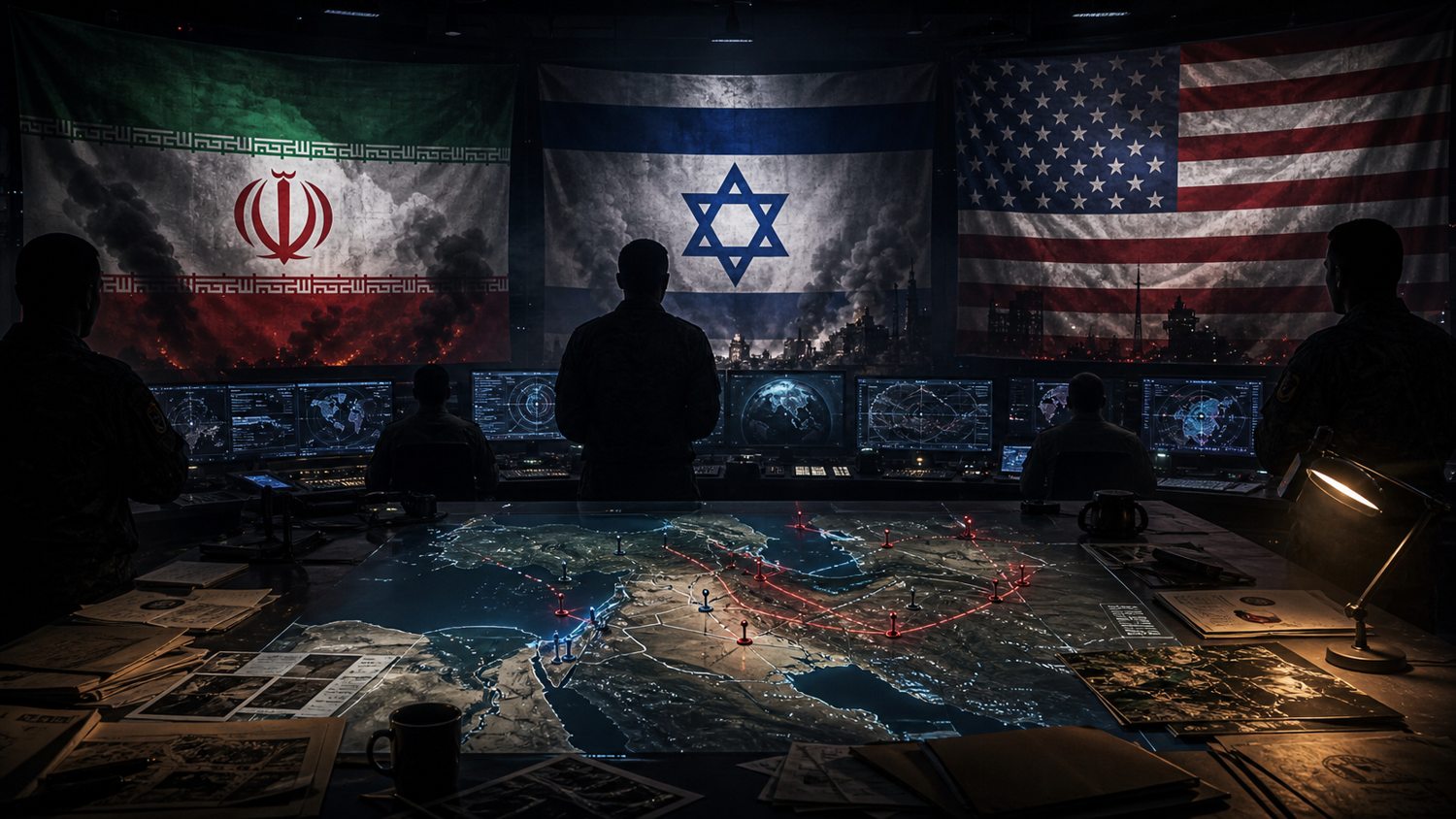
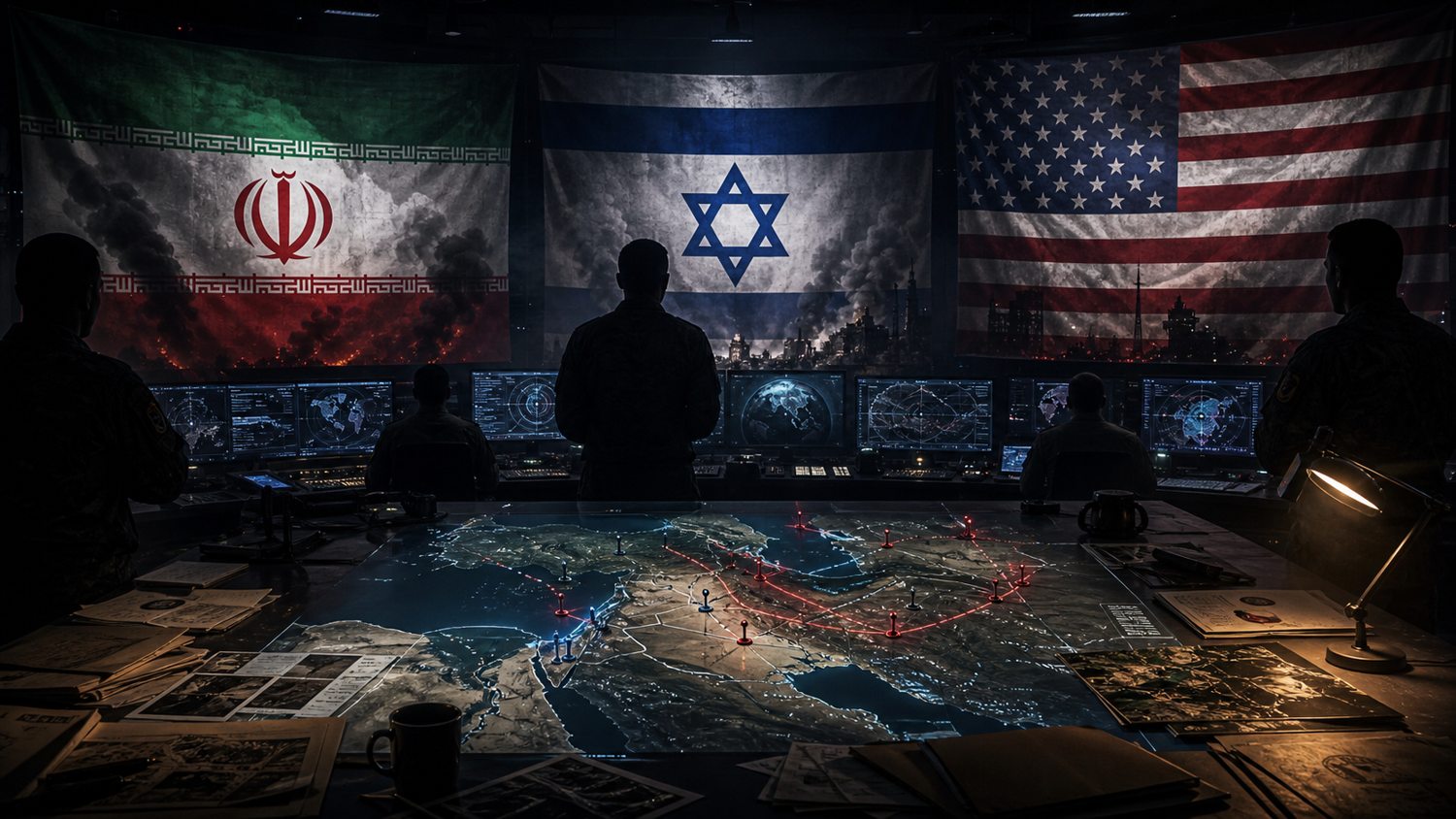
- The 2026 Iran war began on 28 February with US and Israeli strikes that killed supreme leader Ali Khamenei, whose son Mojtaba Khamenei took over in the first hereditary succession in the Republic's history.
- Iran mined the Strait of Hormuz, the chokepoint for about a fifth of the world's oil, choking shipping and sending Brent crude to a peak of around $126 a barrel.
- An unsigned US and Iran 60-day ceasefire memorandum would reopen the strait and begin nuclear talks, but it still awaits a final signature.
- Oil has eased to the low-to-mid $90s on ceasefire hopes, but a full reopening of Hormuz is likely to be only partial at first.
- For India, which imports most of its crude and gas through Hormuz, the war inflated the oil import bill and pressured the rupee.
- The whole oil-price story now hinges on one unsigned page: sign it, and the world moves toward cheaper oil.
On paper, the 2026 Iran war is almost over. A single document, a draft memorandum negotiated between Washington and Tehran, would extend the ceasefire by sixty days, reopen the Strait of Hormuz to unrestricted shipping, and begin talks to end the war for good. On the water, it is a different story. In the first week of June, American and Iranian forces were still trading fire across the Gulf, Israel was still striking Hezbollah in Lebanon, and more than six hundred ships sat stranded behind a minefield Iran had laid in the world’s most important oil passage. The distance between those two realities, a peace that is written but unsigned, and a war that will not stop, is what the 2026 Iran war has become.
The morning that started it
The war began in a single morning. On 28 February 2026, after years of failed nuclear diplomacy, the United States and Israel launched a coordinated wave of airstrikes across Iran, hitting nuclear sites including the deeply buried Fordow facility, along with military command centres and government targets. The two governments framed it openly as a campaign to dismantle Iran’s nuclear and missile programmes and to force a change of leadership in Tehran. The opening blow did exactly that: a strike on the compound of Supreme Leader Ayatollah Ali Khamenei killed the man who had ruled Iran since 1989, with state media confirming his death on 1 March. Within days, Iran’s Assembly of Experts named his son, Mojtaba Khamenei, as the country’s third Supreme Leader, a dynastic handover, disputed in its legitimacy, that has so far hardened Tehran’s stance rather than softened it. Iran answered with missiles and drones aimed at US bases and Gulf oil infrastructure, and Hezbollah opened a second front from Lebanon. But Iran’s most effective weapon was never fired from a launcher. It was the map.
The weapon was geography
The Strait of Hormuz is a channel only a few kilometres wide at its narrowest, and through it normally passes roughly a fifth of the world’s seaborne oil, along with vast volumes of liquefied natural gas. In early March, Iran moved to close it, warning off “hostile” shipping and seeding the waterway with naval mines. Traffic collapsed to a trickle, at one point running near 5% of pre-war levels; QatarEnergy declared force majeure as cargoes were stranded, and fuel shortages rippled through parts of Asia. Today more than six hundred vessels, including some 325 oil tankers, remain stuck in and around the Gulf, unable to load or sail. The head of the International Energy Agency called it the greatest global energy security challenge in history. Markets agreed: Brent crude, near $72 a barrel the day before the war, spiked to around $126 at the height of the panic and, even now with a deal in sight, sits stubbornly in the low-to-mid $90s, a standing premium for a strait that will not open.
The deal on paper
By late spring, the cost of the standstill pushed both sides toward the table, and what emerged is unusually specific. Under the draft memorandum, the ceasefire would be extended sixty days, renewable by mutual consent. The Strait of Hormuz would be declared unrestricted, no tolls, no “harassment” of shipping, and Iran would have thirty days to clear every mine it had laid. In exchange, the United States would lift its blockade of Iranian ports and issue sanctions waivers allowing Iran to sell oil again, with the eventual release of an estimated $24 billion of Iranian funds frozen in banks around the world. On the hardest question of all, the draft has Iran committing never to build a nuclear weapon and to negotiate the suspension of uranium enrichment and the removal of its stockpile of highly enriched uranium, the same material now buried under the rubble of the sites bombed in February. It amounts to a blunt, one-page bargain: open the water, and the money and the sanctions relief follow.
The war on the water
And yet it remains unsigned. President Trump has reportedly edited the draft more than once, over the uranium and Hormuz language, and has ended at least one round of talks without a final decision; Iranian officials say the deal is not settled on their side either, and accuse Washington of lacking the will to deliver stability. The distrust is not abstract. In the opening days of June, even as negotiators worked, the United States intercepted a wave of Iranian missiles and drones heading toward the Strait and struck Iranian coastal radar sites; Iran fired missiles toward Israel; and Israeli forces killed a senior commander in Lebanon as fighting with Hezbollah intensified despite a separate Israel–Lebanon ceasefire. The diplomacy has taken an unusual shape, with Pakistan positioning itself as a regional broker and sending its interior minister to Tehran to carry messages on Washington’s behalf. The result is a conflict suspended between signatures and strikes, close enough to peace to be haggling over the release of frozen bank accounts, close enough to war to be shooting down drones over the same stretch of water.
The human cost
Beneath the diplomacy is a heavy toll. By early June, monitoring groups counted several thousand people killed and tens of thousands injured across the conflict. Iran has borne among the heaviest losses, with several thousand dead, many of them civilians; Lebanon has suffered heavy civilian casualties as the fighting spread, and casualties have been recorded on the American and Israeli sides as well. These numbers are necessarily approximate, wartime counts are contested and revised as more emerges, but they are a reminder that behind the talk of tolls and tankers, the price has fallen most heavily on civilians.
Why the world is watching one strait
For a war fought far from most of the world, the 2026 Iran war reaches surprisingly far into ordinary life. A single blocked channel has rerouted global shipping the long way around Africa, lifted freight and insurance costs, and kept a war premium in the price of every barrel, a direct push on inflation everywhere, and a particular danger to the import-dependent economies of Asia. India, which buys much of its crude and the bulk of its cooking gas and LNG from the Gulf, has felt it in both its energy bill and a rupee near record lows against the dollar. The deeper lesson is one of fragility: that a nuclear-threshold state could change its leadership by assassination in a matter of weeks, and that a few hundred sea mines in a narrow strait could become the single most important variable in the global economy.
What to watch now
Three things will decide what comes next. The first is a signature, whether the Trump administration and Mojtaba Khamenei’s government actually put their names to the memorandum, or let it lapse. The second is a clock: if the deal holds, Iran has thirty days to clear its mines, and only then will tankers move and oil prices ease in earnest. The third is Lebanon, where Iran has warned that any Israeli strike on Beirut would trigger a “full-scale resumption” of the war, the one tripwire that could turn a frozen conflict hot again overnight. For now, the world is doing what it has done for three months: watching a narrow stretch of water, and waiting to see whether a page becomes a peace.
This blog is for information and general awareness only. It summarises publicly reported developments in an ongoing conflict, and is not political commentary, investment advice, or a recommendation of any kind. Details change rapidly and the figures cited are subject to revision.